Hidden damp in bathrooms often stems from errors during the waterproofing process. These mistakes can range from minor oversights to significant structural issues, all leading to moisture infiltration that might not become apparent until extensive damage has occurred. Understanding these common missteps is crucial for anyone undertaking a bathroom renovation or construction project, or for homeowners trying to diagnose persistent damp issues. The problem isn’t always obvious; water can travel along joists, behind plasterboard, and under flooring, manifesting far from its original entry point. Identifying the root cause requires a systematic approach, starting with an awareness of where things typically go wrong.
Key Differences Between Bathroom Waterproofing Mistakes and Shower Waterproofing Errors
While often used interchangeably, “bathroom waterproofing mistakes” and “shower waterproofing errors” refer to distinct scopes of failure, though they share common underlying principles. Bathroom waterproofing encompasses the entire wet area within a bathroom, including floors, walls, and sometimes even ceilings, especially in rooms with steam showers or inadequate ventilation. It’s a holistic approach to containing moisture within the room’s envelope.
Shower waterproofing, conversely, focuses specifically on the shower enclosure itself—the pan, curb, and the walls directly surrounding the showerhead. This area experiences the most direct and consistent water exposure. Errors here are often more immediate in their consequences due to the sheer volume of water involved.
Consider a scenario where the entire bathroom floor membrane is incorrectly installed, perhaps with insufficient overlap at seams or an inadequate bond to the substrate. This is a bathroom waterproofing mistake. Water from a leaky toilet or an overflowing sink could then seep through, affecting the subfloor across a wide area. In contrast, if the waterproofing membrane behind the shower tiles is punctured during tile installation, or if the shower pan isn’t properly sloped, allowing water to pool, these are shower waterproofing errors. The dampness might initially be confined to the immediate vicinity of the shower, perhaps appearing as discolored grout lines or swelling at the base of the shower wall.
The practical implication is that a bathroom waterproofing mistake can lead to widespread dampness affecting adjacent rooms, structural timbers, or even multiple floors of a building. A shower waterproofing error, while serious, often has a more localized impact, at least initially. However, prolonged shower errors can eventually contribute to broader bathroom damp issues if left unaddressed. Trade-offs involve the complexity of repair: fixing a localized shower pan issue is generally less disruptive and costly than overhauling an entire bathroom’s compromised waterproofing system.
Shared Benefits and Overlaps
Despite their differences in scope, effective waterproofing—whether for the whole bathroom or just the shower—shares fundamental benefits and overlaps in execution principles. The primary benefit is the prevention of water damage to the building’s structure, which can include rot, mold growth, and compromised structural integrity. Both types of waterproofing aim to create a continuous, impervious barrier that directs water towards drainage and prevents it from penetrating walls, floors, and ceilings.
Consider the role of proper substrate preparation. For both a full bathroom and a shower enclosure, the surface must be clean, dry, and structurally sound before any waterproofing membrane is applied. Adhesion issues, whether for a liquid membrane across a large floor area or a sheet membrane in a shower pan, stem from neglecting this crucial first step. Similarly, correct detailing at junctions—where walls meet floors, or around penetrations like pipes—is critical for both. A poorly sealed pipe penetration in a shower wall is functionally similar to a poorly sealed toilet flange in terms of its potential to allow water ingress, albeit with different volumes of water at play.
The overlap also extends to the types of materials used. Liquid-applied membranes, sheet membranes, cementitious coatings, and joint sealants are common across both applications. The choice of material often depends on the specific demands of the area (e.g., higher flexibility for movement joints, greater resistance to standing water in a shower pan). The goal is always to achieve a monolithic, watertight surface that can withstand the constant presence of moisture.
When Bathroom Waterproofing Mistakes May Be a Better Fit
The phrase “bathroom waterproofing mistakes may be a better fit” is a bit of a misnomer; no one aims for mistakes. Instead, this section considers scenarios where a comprehensive understanding of potential bathroom-wide waterproofing failures is more critical than focusing solely on the shower. This heightened awareness is particularly relevant in situations where the entire bathroom is considered a “wet room” or when the design incorporates elements that distribute water beyond the immediate shower area.
For instance, in a true wet room where the entire floor is designed to get wet, or where there’s no defined shower tray, the waterproofing must extend across the entire floor and up the walls to a significant height. A mistake here, such as an inadequate height of the waterproofing membrane on the walls or a failure to properly integrate floor wastes, would be categorized as a general bathroom waterproofing mistake. The implications are broad, potentially affecting the entire subfloor and adjacent wall structures.
Another scenario is when the bathroom is located on an upper floor, especially above living spaces or bedrooms. A leak from any source within the bathroom—be it a toilet, sink, bath, or shower—can have catastrophic consequences downstairs. In such cases, the emphasis shifts to ensuring the entire bathroom acts as a contained, waterproof box. Overlooking the waterproofing of the bath hob (the tiled surround of a bathtub) or failing to seal around the toilet’s base are examples of bathroom waterproofing mistakes that can lead to hidden damp far beyond the shower area.
Furthermore, older homes with inconsistent substrates or those undergoing significant layout changes might require a more holistic waterproofing strategy. The risk of water migrating through cracks in an old concrete slab or along poorly joined plasterboard in a renovated space necessitates a full-room approach. Here, focusing only on the shower’s waterproofing would be a critical oversight, leaving other potential vulnerabilities unaddressed.
When Shower Waterproofing Errors May Be a Better Fit
Conversely, a deeper focus on shower waterproofing errors is paramount when the shower enclosure is the primary source of water exposure and the rest of the bathroom is relatively dry. This often applies to bathrooms with traditional shower trays and cubicles, where the design aims to contain water strictly within the shower area.
Consider a compact bathroom where a pre-fabricated shower tray is installed. The critical points of failure here are often the seal between the tray and the wall, the integrity of the tray itself (e.g., cracks), and the effectiveness of the waste trap. Errors such as using the wrong sealant, insufficient curing time, or improper installation of the tray’s waste mechanism are specific shower waterproofing errors. The resulting dampness is usually concentrated around the shower base and the lower sections of the shower walls.
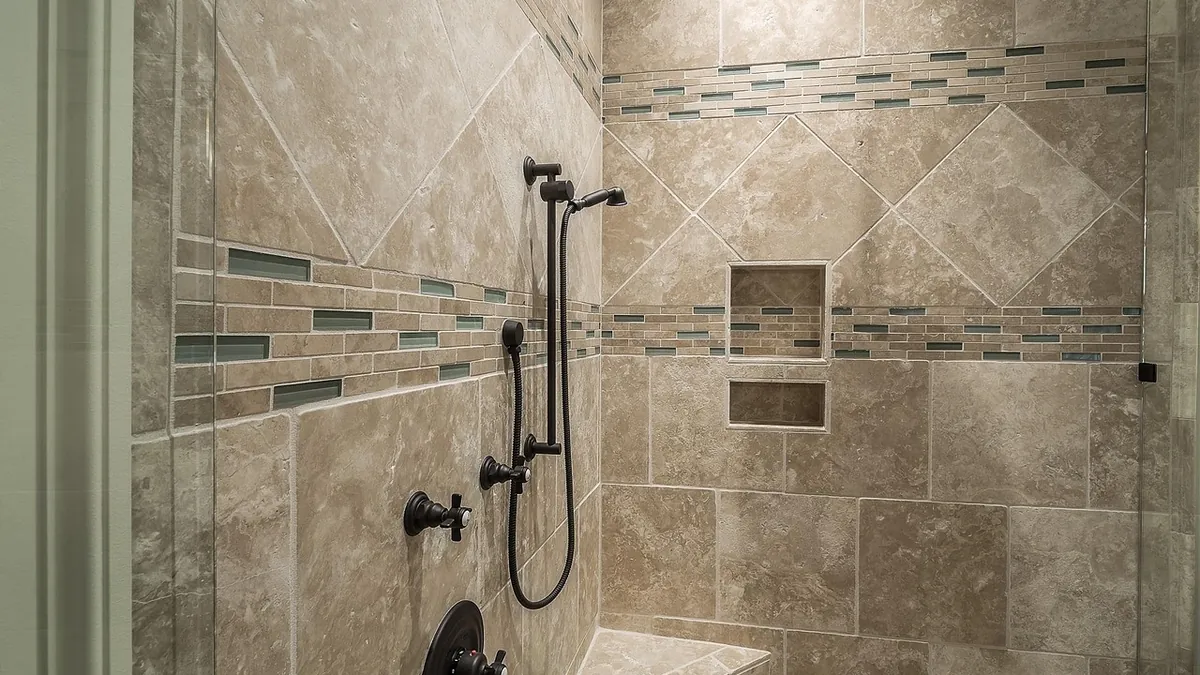
Another example involves tiled shower benches or niches within the shower enclosure. If these elements are not properly sloped for drainage or are inadequately waterproofed before tiling, they can become retention points for water, leading to localized leaks. These are distinct shower-specific issues that don’t necessarily implicate the waterproofing of the entire bathroom floor or other walls.
For professional installers, understanding the nuances of shower waterproofing errors is essential for quality control. This includes meticulous attention to detail at corners, curbs, and penetrations for shower fittings (like shower heads or mixer valves). A tiny pinhole in the waterproofing membrane behind a shower mixer can lead to persistent dampness within the wall cavity, even if the rest of the bathroom is perfectly dry. The specific pressures and volumes of water within a shower necessitate a dedicated focus on the integrity of this high-risk zone.
How to Choose Based on Goals and Context
Choosing the right approach to preventing “bathroom waterproofing mistakes” versus “shower waterproofing errors” isn’t about picking one over the other, but rather about understanding the specific vulnerabilities and tailoring the waterproofing strategy accordingly. The decision hinges on the bathroom’s design, its location within the building, the materials used, and the expected level of water exposure.
| Factor | Focus: Bathroom Waterproofing Mistakes (Broad Scope) | Focus: Shower Waterproofing Errors (Narrow Scope) |
|---|---|---|
| Bathroom Type | Wet rooms, bathrooms with no defined shower tray, bathrooms with freestanding tubs. | Traditional bathrooms with enclosed shower cubicles and defined shower trays. |
| Location | Upper floors, bathrooms above sensitive areas (e.g., living rooms, electrical panels). | Ground floor bathrooms, bathrooms where leaks are less structurally critical. |
| Design Elements | Multiple water sources (toilet, sink, bath, shower), open-plan wet areas. | Self-contained shower units, minimal water splash outside shower. |
| Substrate Condition | Old, uneven, or potentially porous substrates requiring full encapsulation. | New, stable, and consistent substrates where localized protection suffices. |
| Risk Tolerance | Low tolerance for any water migration; preference for maximum protection. | Higher tolerance for localized, contained issues; focus on immediate shower area. |
| Budget/Time | Larger budget, more time for comprehensive preparation and application. | Smaller budget, quicker application focused on the highest-risk zone. |
For a homeowner renovating an upstairs bathroom that will feature a large, open-plan shower and a freestanding tub, the goal should be to prevent bathroom waterproofing mistakes. This means ensuring the entire floor and lower wall sections are robustly waterproofed, treating the room as a single wet zone. The context demands a comprehensive approach because water from any source could spread.
Conversely, for a builder installing a standard shower cubicle on a ground-floor slab, the primary concern might be to avoid shower waterproofing errors. While general good practice for the rest of the bathroom is still necessary, the critical focus will be on the shower tray installation, wall waterproofing within the cubicle, and sealing around the shower fittings. The context suggests that if a leak occurs, it’s most likely to originate from and be contained within the shower itself.
Ultimately, the most effective strategy often involves a combination of both: a robust general bathroom waterproofing scheme complemented by meticulous attention to detail in the high-exposure shower area. The “choice” is less about exclusivity and more about prioritization and resource allocation based on risk assessment.
Frequently Asked Questions
What is bathroom waterproofing mistakes?
Bathroom waterproofing mistakes refer to any errors or oversights during the installation of waterproofing systems in a bathroom that lead to the failure of the system and subsequent water damage. These can include anything from inadequate substrate preparation and incorrect membrane application to poor detailing around penetrations and insufficient curing times. The consequence is hidden damp, mold growth, structural damage, and costly repairs.
How does bathroom waterproofing mistakes compare with alternatives?
The concept of “bathroom waterproofing mistakes” isn’t an alternative to something, but rather a category of failures within the broader practice of waterproofing. The “alternative” isn’t to make mistakes, but to execute proper, effective waterproofing. When comparing different waterproofing methods (e.g., liquid membranes vs. sheet membranes, cementitious coatings), the potential for mistakes exists with all of them. The choice of method impacts the types of mistakes that can occur (e.g., improper mixing for liquid, incorrect overlap for sheets). Proper installation, regardless of the method, is the only alternative to making mistakes.
What are the most common mistakes people make with bathroom waterproofing?
The most common mistakes include:
- Inadequate Substrate Preparation: Failing to clean, prime, or repair the surface before applying waterproofing. Any dust, grease, or unevenness can compromise adhesion.
- Insufficient Membrane Coverage/Thickness: Applying too thin a layer of liquid membrane, or not extending sheet membranes far enough up walls or over overlaps.
- Poor Detailing at Junctions and Penetrations: Corners, pipe entries, and floor wastes are highly vulnerable. Inadequate sealing or reinforcement at these points is a frequent failure.
- Ignoring Cure Times: Not allowing waterproofing products to fully cure before tiling or exposing them to water, which can weaken the membrane.
- Puncturing the Membrane: Damaging the waterproof layer during subsequent stages like tiling, or by drilling into walls without knowing the membrane’s location.
- Incorrect Slope to Drains: Especially in showers, if the floor isn’t sloped adequately, water can pool and eventually find its way through even minor imperfections.
- Using Non-Waterproof Materials: Relying on standard plasterboard or MDF in wet areas without proper waterproofing, or using non-waterproof adhesives or grouts in critical zones.
- Lack of Expansion Joints: Failing to include flexible joints in large tiled areas or at material transitions, leading to cracking and compromised waterproofing.
In summary, hidden damp in bathrooms is a persistent and often costly issue, almost invariably a direct result of errors made during the waterproofing process. While “bathroom waterproofing mistakes” encompass a broad range of potential failures across the entire wet area, “shower waterproofing errors” pinpoint issues specific to the most water-intensive zone. Both require meticulous attention to detail, proper material selection, and adherence to installation guidelines. A comprehensive approach, treating the entire bathroom as a potential wet zone, is often the safest bet, especially in critical locations or with complex designs. For homeowners and renovators, understanding these distinctions and common pitfalls is the first step toward building a durable, damp-free bathroom.
DIY safety disclaimer
Home Leak Fix publishes general DIY information for homeowners. Water intrusion can involve structural, electrical, height, mould, or insurance risks. Use proper safety equipment, follow local building rules, and call a qualified professional when a repair is unsafe, unclear, or beyond your experience.