Choosing the right waterproof coating for a flat roof involves understanding the properties and performance of several common materials. Flat roofs, by their nature, are more susceptible to standing water and require robust waterproofing to prevent leaks and extend their lifespan. The primary contenders in this space are acrylic, silicone, polyurethane, and liquid rubber coatings. Each offers distinct advantages and disadvantages concerning durability, application, cost, and environmental factors. This article will compare these options to help clarify which might be the most suitable for a given situation.
Key Differences Between Coating Types
While all these materials aim to create a waterproof barrier, their chemical compositions lead to significant differences in how they perform, how they are applied, and their longevity. Understanding these distinctions is crucial for selecting the right “best waterproof coating for flat roof” for a specific project.
Acrylic Roof Coatings
Acrylic coatings are water-based elastomeric products. They are generally affordable and easy to apply, often requiring no special equipment beyond rollers or sprayers. A key characteristic is their high reflectivity, particularly in lighter colors, which can significantly reduce roof surface temperatures and, consequently, indoor cooling costs. They cure by water evaporation and form a flexible, seamless membrane.
However, acrylics have limitations. They perform best in climates with minimal ponding water, as prolonged exposure to standing water can lead to re-emulsification and premature degradation. Their elasticity can also diminish in very cold temperatures, making them more susceptible to cracking. A typical scenario where acrylics excel is on a large commercial building in a sunny, dry climate where energy efficiency is a priority, and the roof has excellent drainage.
Silicone Roof Coatings
Silicone coatings are solvent-based products known for their exceptional resistance to UV radiation and ponding water. Unlike acrylics, silicone does not degrade or chalk when exposed to sunlight, nor does it re-emulsify in standing water. This makes it a highly durable option for roofs where water drainage might be an issue. Silicone coatings maintain their flexibility over a wide range of temperatures, offering good crack resistance.
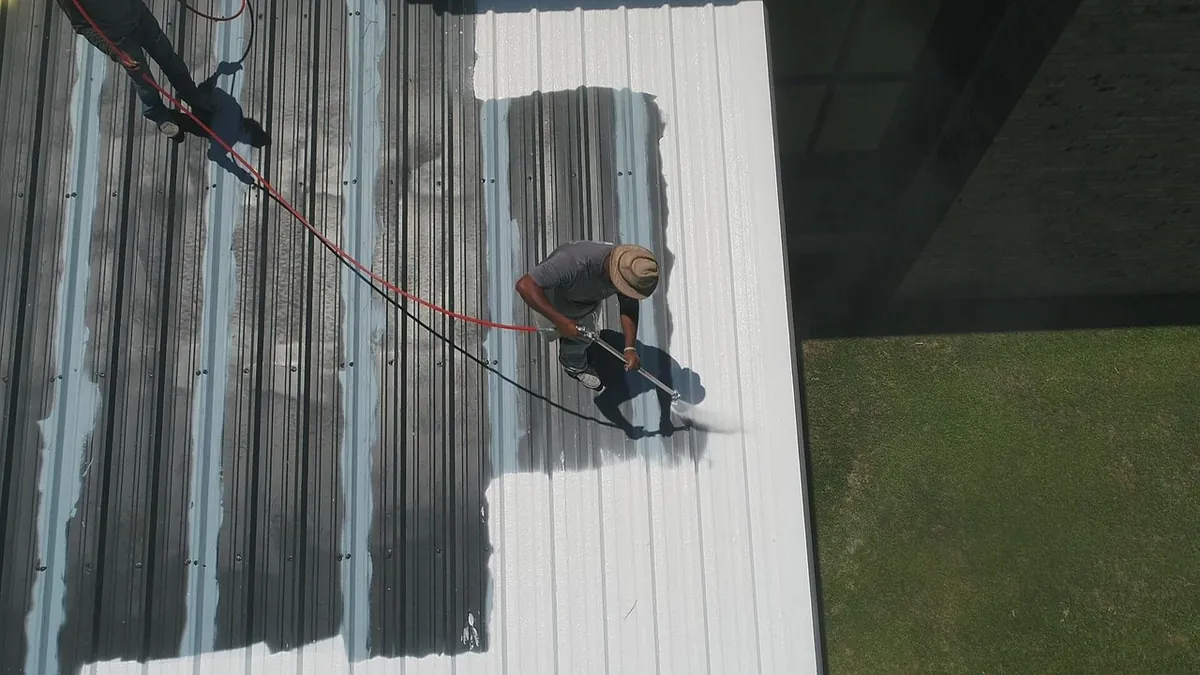
The downsides include a higher material cost and a more challenging application process, often requiring specialized spray equipment due to their viscosity. They also tend to be less reflective than acrylics, although white silicone still offers good solar reflectivity. A common application for silicone is on older flat roofs with minor ponding issues, where its durability and moisture resistance can significantly extend the roof’s life without requiring a full tear-off.
Polyurethane Roof Coatings
Polyurethane coatings are typically solvent-based and come in two main types: aromatic and aliphatic. Aromatic polyurethanes are more cost-effective but are prone to chalking and UV degradation, making them better suited as a base coat or in areas not exposed to direct sunlight. Aliphatic polyurethanes, while more expensive, offer excellent UV stability, color retention, and abrasion resistance. Both types are highly durable, flexible, and have good resistance to ponding water.
Polyurethanes are known for their exceptional adhesion to various substrates and their toughness, making them suitable for roofs with heavy foot traffic or those subjected to physical wear. Application can be more complex due to their rapid cure times and the need for careful mixing. An example use case would be a rooftop deck or a commercial building with frequent maintenance access, where the coating needs to withstand physical abuse.
Liquid Rubber Coatings
The term “liquid rubber” can be a broad category, often referring to various elastomeric coatings, including some acrylics, silicones, and polyurethanes that behave like rubber once cured. However, distinct liquid rubber products, often asphalt or polymer-modified asphalt emulsions, exist. These are known for their extreme flexibility, self-healing properties (in some formulations), and excellent waterproofing capabilities. They are particularly effective at bridging cracks and accommodating structural movement.
Liquid rubber coatings, known for their thick consistency, can be challenging to apply and often have strong odors. Typically black, these coatings absorb more solar radiation, potentially increasing roof temperatures unless a reflective topcoat is used. They are frequently used to repair existing built-up roofs or as a durable, highly flexible waterproofing layer in new construction.
Shared Benefits and Overlaps
Despite their differences, all these coatings share fundamental benefits that make them attractive options for flat roof waterproofing. They all aim to create a monolithic, seamless membrane over the existing roof substrate, eliminating seams that are common failure points in traditional roofing systems. This seamless nature is a significant advantage in preventing water intrusion.
Furthermore, these coatings contribute to the overall resilience of the roof system. They add a protective layer that can shield the underlying membrane from UV radiation, thermal expansion and contraction, and minor physical damage. This protection often extends the life of the existing roof, delaying the need for a costly tear-off and replacement. Many coatings also offer some level of energy efficiency, particularly lighter-colored options, by reflecting sunlight and reducing heat absorption. Their ability to adhere directly to various substrates often means less waste generated from roof removal, aligning with more sustainable construction practices.
Consider a scenario where a commercial building has an aging EPDM roof that’s still structurally sound but showing signs of wear and minor leaks. Instead of a full replacement, applying any of these elastomeric coatings can provide a new, watertight surface, leveraging the existing structure and saving on labor and material disposal costs. The choice then narrows down to which coating’s specific attributes best match the roof’s conditions and the owner’s priorities.
When a Specific Coating May Be a Better Fit
The “best” coating is highly dependent on the specific circumstances of the roof and the project goals. There’s no one-size-fits-all answer.
When Acrylic Roof Coating May Be a Better Fit
Acrylic coatings are often the go-to choice when:
- Budget is a primary concern: Acrylics are typically the most cost-effective per square foot, both in material and application labor.
- Energy efficiency is a high priority in sunny climates: Their high reflectivity in lighter colors can lead to significant reductions in cooling costs. For example, a large retail store in Arizona aiming to lower its electricity bill would find acrylics very appealing, provided the roof has adequate drainage to prevent ponding.
- The roof has good drainage and minimal ponding water: Acrylics perform well when water doesn’t sit on the roof for extended periods. A newly constructed flat roof with proper slopes and drains is an ideal candidate.
- Ease of application is important: Many acrylics can be applied with standard painting equipment, making them suitable for DIY projects or contractors without specialized gear.
When Silicone Roof Coating May Be a Better Fit
Silicone coatings shine in situations where:
- Ponding water is an unavoidable issue: Silicone’s exceptional resistance to standing water makes it ideal for roofs with imperfect drainage or areas where water naturally collects. Imagine an industrial facility in a rainy climate with a large, low-slope roof that inevitably has some ponding after heavy rains; silicone would be a robust solution here.
- Extreme UV exposure is a constant: Silicone maintains its properties and aesthetics even under intense sunlight, resisting chalking and degradation. A building in a high-altitude, sunny region would benefit from silicone’s UV stability.
- Long-term durability and low maintenance are key: While the initial cost is higher, silicone’s longevity and minimal maintenance requirements can lead to lower lifecycle costs. A property manager looking for a “set it and forget it” solution for a critical building might opt for silicone.
- Adhesion to existing asphalt or single-ply membranes is needed: Silicone adheres well to many common roofing materials, allowing for effective restoration without tear-off.
When Polyurethane Roof Coating May Be a Better Fit
Polyurethane coatings are particularly well-suited for:
- Roofs requiring high abrasion resistance and toughness: If the roof experiences frequent foot traffic, equipment placement, or other physical wear, aliphatic polyurethanes offer superior protection. A rooftop restaurant or a building with regular HVAC maintenance access would benefit from this resilience.
- Demanding climates with wide temperature swings: Polyurethanes maintain flexibility across a broad temperature range, making them suitable for regions with hot summers and cold winters.
- Adhesion to challenging substrates: Polyurethanes often boast excellent adhesion to diverse materials, including concrete, metal, and existing membranes, making them versatile for various restoration projects.
- Achieving specific aesthetic or performance characteristics: Aliphatic polyurethanes can be formulated in various colors with excellent color retention, which might be important for visible roofs or architectural considerations.
When Liquid Rubber Coatings May Be a Better Fit
Specialized liquid rubber coatings (beyond generic elastomeric terms) are often preferred when:
- Extreme flexibility and crack bridging are paramount: For roofs with significant structural movement or existing cracks that need to be sealed and prevented from propagating, liquid rubber’s elasticity is a major asset. An older building prone to settling or a roof over a structure that experiences vibrations might benefit.
- Restoring existing asphalt-based roofs: Some liquid rubber formulations are designed to work particularly well with asphaltic substrates, renewing their waterproofing capabilities.
- Self-healing properties are desired: Certain liquid rubber products have unique self-healing characteristics, allowing them to reseal minor punctures or hairline cracks over time, offering an extra layer of protection.
- A very thick, robust protective layer is needed: Liquid rubber can often be applied in thicker coats, providing a substantial barrier against water and wear.
How to Choose Based on Goals and Context
The decision-making process for the “best waterproof coating for flat roof” involves weighing several factors specific to your project. It’s not just about the material cost but also factors like climate, roof condition, expected lifespan, and long-term maintenance.
Climate and Weather Conditions
- Hot, sunny climates with good drainage: Acrylics are excellent for their reflectivity and cost-effectiveness.
- Hot, sunny climates with ponding water: Silicone is the superior choice due to its UV stability and resistance to standing water.
- Cold climates with freezing and thawing cycles: Silicone and polyurethane maintain flexibility better than acrylics in extreme cold.
- Regions with heavy rainfall and potential ponding: Silicone and polyurethane offer robust protection against water ingress.
Roof Condition and Substrate
- Existing roof structurally sound with minor issues: All coatings can be used for restoration, but the specific substrate (e.g., asphalt, EPDM, metal) might influence adhesion and primer requirements.
- Roofs with existing cracks or potential for movement: Liquid rubber or highly flexible polyurethanes are better at bridging and accommodating movement.
- Roofs requiring strong adhesion to diverse materials: Polyurethanes are often praised for their versatility in adhesion.
Budget and Longevity Expectations
- Limited budget, shorter-term solution (5-10 years): Acrylics are the most economical upfront.
- Mid-range budget, longer-term solution (10-20 years): Polyurethanes offer good durability and performance.
- Higher budget, maximum longevity and minimal maintenance (15-25+ years): Silicone provides excellent long-term performance, especially in challenging conditions.
Application Complexity and Safety
- DIY or straightforward application: Acrylics are generally the easiest to apply.
- Professional application with specialized equipment: Silicone and polyurethane often benefit from or require professional application due to viscosity, cure times, or solvent content.
- Odor considerations: Water-based acrylics have lower VOCs and less odor; solvent-based coatings (silicone, polyurethane, some liquid rubbers) require more ventilation and safety precautions.
Energy Efficiency Goals
- Maximizing solar reflectivity and reducing cooling costs: Lighter-colored acrylics and silicones are top performers.
To summarize the decision points, consider this comparison table:
| Feature/Factor | Acrylic | Silicone | Polyurethane | Liquid Rubber (Specific types) |
|---|---|---|---|---|
| Ponding Water | Poor (re-emulsifies) | Excellent | Good to Excellent | Excellent |
| UV Resistance | Good (reflectivity helps) | Excellent (no degradation) | Good (aliphatic) / Poor (aromatic) | Variable (often needs topcoat) |
| Cost (Material) | Low | High | Medium to High | Medium to High |
| Application Ease | Easiest (water-based) | Moderate (viscous, often spray) | Moderate to Difficult (fast cure, solvent) | Moderate to Difficult (thick, odorous) |
| Flexibility | Good (can stiffen in cold) | Excellent (wide temp range) | Excellent (wide temp range) | Excellent (crack bridging) |
| Durability/Wear | Moderate | Good | Excellent (abrasion resistant) | Excellent (tough, self-healing) |
| Energy Efficiency | High (light colors) | High (light colors) | Moderate (can be reflective) | Low (typically black, needs topcoat) |
| Lifespan | 5-10 years | 15-25+ years | 10-20 years | 10-20+ years |
| Odor/VOCs | Low | Moderate to High | High | High |
Ultimately, the best approach is to consult with a qualified roofing professional. They can assess the specific conditions of your flat roof, discuss your budget and goals, and recommend the most appropriate coating system, ensuring proper surface preparation and application for optimal performance.
Frequently Asked Questions
What is the best waterproof coating for a flat roof?
There isn’t a single “best” waterproof coating for all flat roofs. The ideal choice depends on factors like the roof’s current condition, climate, budget, desired lifespan, and whether ponding water is an issue. Acrylic coatings are good for budget-friendly, reflective solutions on well-drained roofs. Silicone excels in areas with ponding water and intense UV exposure. Polyurethane offers high durability and abrasion resistance, while specialized liquid rubber coatings provide extreme flexibility and crack bridging.
How does the best waterproof coating for a flat roof compare with alternatives?
When considering flat roof coatings, the main alternatives are often traditional roofing systems like built-up roofs (BUR), modified bitumen, or single-ply membranes (EPDM, TPO, PVC). Coatings offer a distinct advantage as they can often be applied over existing roof systems, extending their life without a full tear-off. This reduces waste and labor costs. Unlike traditional systems that rely on seams, coatings create a monolithic, seamless barrier, which eliminates common leak points. However, coatings are generally restorative or protective; they don’t address fundamental structural issues and require a sound substrate for proper adhesion and performance.
What are the most common mistakes people make with the best waterproof coating for a flat roof?
The most common mistakes include:
- Improper Surface Preparation: Failing to thoroughly clean, repair, and prime the existing roof surface is a leading cause of coating failure. Dirt, debris, grease, or an unstable substrate will prevent proper adhesion.
- Ignoring Ponding Water: Applying a coating not designed for ponding water (like many acrylics) to a roof with drainage issues will lead to premature degradation and failure.
- Applying in Unsuitable Weather: Applying coatings in too cold, too hot, too humid, or rainy conditions can negatively impact cure times, adhesion, and overall performance.
- Inadequate Thickness: Applying too thin a coat (often to save money) compromises the coating’s durability and waterproofing capabilities. Manufacturers specify minimum dry film thickness for a reason.
- Choosing the Wrong Coating for the Climate/Roof Type: Selecting a coating that doesn’t match the environmental conditions or the existing roof material can lead to poor performance and a shortened lifespan.
- DIY Mistakes: While some coatings are DIY-friendly, others require specialized equipment, experience, and safety precautions. Improper mixing, application techniques, or lack of safety gear can lead to poor results or injury.
Conclusion
Selecting the appropriate waterproof coating for a flat roof requires careful consideration of various factors beyond just the initial cost. Acrylic, silicone, polyurethane, and liquid rubber each offer unique strengths tailored to different environmental conditions, budget constraints, and performance expectations. For instance, a roof in a sunny, dry climate prioritizing energy efficiency might lean towards acrylic, while a roof with persistent ponding water would benefit significantly from silicone’s resilience. Polyurethane offers robust durability for high-traffic areas, and specialized liquid rubbers excel at bridging cracks and accommodating structural movement.
Ultimately, the “best” choice is the one that aligns most closely with the specific demands of your flat roof and your project goals. Consulting with an experienced roofing professional who can assess your roof’s condition and provide tailored recommendations is often the most reliable path to a long-lasting, watertight solution.
DIY safety disclaimer
Home Leak Fix publishes general DIY information for homeowners. Water intrusion can involve structural, electrical, height, mould, or insurance risks. Use proper safety equipment, follow local building rules, and call a qualified professional when a repair is unsafe, unclear, or beyond your experience.