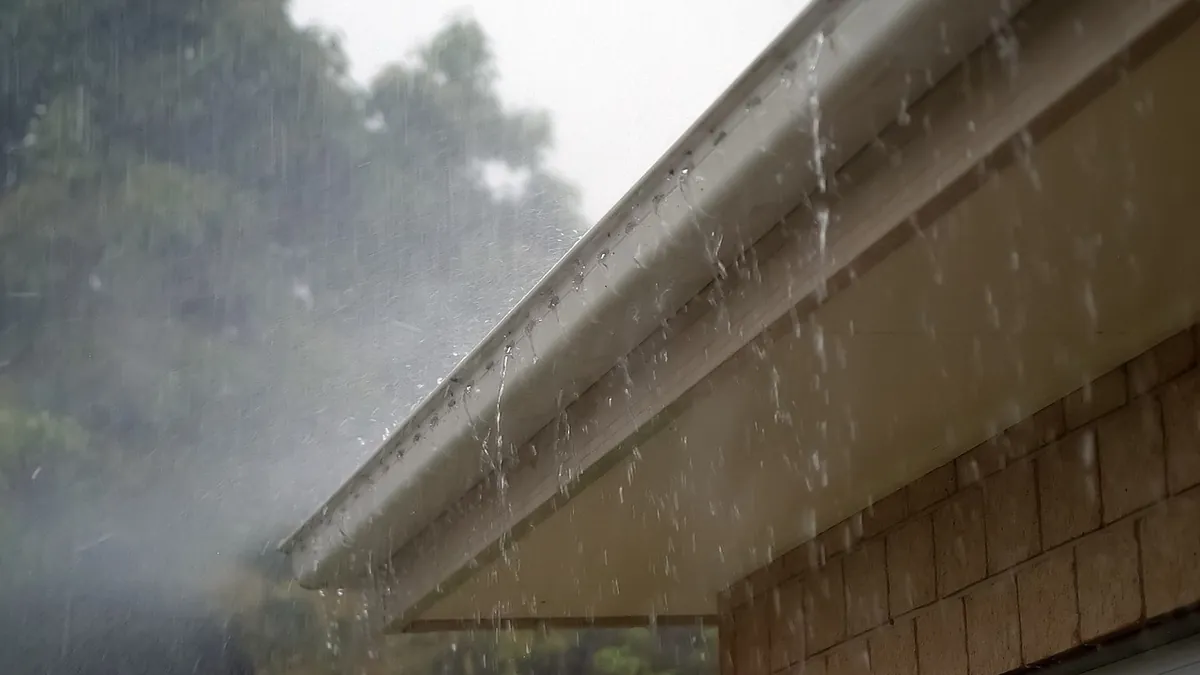
Yes, clogged gutters are a significant and common cause of basement dampness and water intrusion. When gutters become blocked with leaves, twigs, and other debris, they can no longer effectively channel rainwater away from your home’s foundation. Instead, water overflows, pools directly around the foundation, and eventually finds its way into your basement. Understanding this mechanism is crucial for homeowners looking to protect their property from water damage.
Key Differences Between Clogged Gutters and Other Basement Water Issues
While the outcome—a damp basement—might be the same, the root causes can vary. Clogged gutters represent a specific pathway for water intrusion, distinct from other sources like foundation cracks or hydrostatic pressure.
The primary difference lies in the source and delivery mechanism of the water. With clogged gutters, precipitation that falls on the roof is misdirected. Instead of flowing through a controlled system of gutters and downspouts, it’s dumped directly adjacent to the house. This creates an intense, localized saturation of the soil right where it’s most vulnerable to seepage.
Consider a scenario where a heavy rainstorm occurs.
- Clogged Gutters: Rainwater cascades over the gutter’s edge, forming a concentrated stream that impacts the ground inches from your foundation wall. This continuous soaking can quickly overwhelm the soil’s absorption capacity, leading to hydrostatic pressure against the foundation. Over time, this pressure can force water through even minor cracks or porous concrete.
- Foundation Cracks (Primary Cause): Here, the foundation itself has structural weaknesses. While proper drainage is still important, water might enter even if gutters are perfectly clear, simply because there’s an open pathway. The issue isn’t misdirected roof water, but a compromised barrier.
- High Water Table/Hydrostatic Pressure (General): In this case, the ground around the foundation is generally saturated due to poor regional drainage, underground springs, or heavy rainfall over an extended period. Water is pressing in from all sides, not just from a specific overflow point. While clogged gutters exacerbate this, they aren’t the sole instigator.
- Poor Grading: If the ground around your house slopes towards the foundation instead of away from it, surface water will naturally collect there. Again, this isn’t about roof runoff specifically, but general landscape management. Clogged gutters can compound this problem, but they aren’t the only factor.
The practical implication is that addressing clogged gutters is often a straightforward, preventative maintenance task. In contrast, repairing foundation cracks or rerouting a high water table involves more significant, and often more expensive, interventions. Ignoring clogged gutters, however, can lead to these more severe issues over time, as the persistent water exposure weakens the foundation and exacerbates existing vulnerabilities.
Shared Benefits and Overlaps in Preventing Basement Water
While distinct, many solutions for preventing basement water share common benefits and often overlap. A holistic approach to basement waterproofing almost always includes proper management of roof runoff, even when the primary concern isn’t solely clogged gutters.
The overarching benefit is moisture control. Keeping water away from your foundation, regardless of its source, is the fundamental goal. This leads to several shared advantages:
- Reduced Risk of Mold and Mildew: Damp basements are breeding grounds for mold and mildew, which can cause structural damage and indoor air quality issues. Effective water management, including clear gutters, reduces the moisture needed for these organisms to thrive.
- Preservation of Foundation Integrity: Constant saturation and freeze-thaw cycles can degrade concrete and masonry. Diverting water away protects the foundation from premature aging and structural compromise.
- Prevention of Wood Rot: If water penetrates the basement, it can affect wooden structural elements like floor joists, subflooring, and framing, leading to rot and costly repairs.
- Improved Indoor Air Quality: A dry basement contributes to drier air throughout the house, reducing humidity-related problems and potential allergens.
- Increased Property Value: A dry, well-maintained basement is a significant asset, enhancing a home’s value and appeal.
Consider the role of a downspout extension. This component is crucial whether the issue is primarily clogged gutters or general rainwater near the foundation.
- Clogged Gutters: If gutters are cleared, but downspouts dump water right next to the foundation, the problem isn’t fully solved. An extension is needed to carry the now-flowing water a safe distance away.
- General Rainwater Near Foundation: Even if your gutters are pristine, if surface water from other parts of your yard or an incorrectly placed downspout consistently saturates the soil near the foundation, an extension or re-grading can help.
Therefore, while the initial diagnosis might point to “clogged gutters basement damp,” the solution often involves steps that benefit overall water management, such as ensuring proper downspout extensions and positive grading around the home. These measures create layers of defense against water intrusion, regardless of the specific pathway.
When Addressing Clogged Gutters May Be a Better Fit
Focusing specifically on addressing clogged gutters is the most appropriate first step when observable evidence points to roof runoff as the primary culprit for basement dampness. This approach is often more cost-effective and simpler than tackling broader foundation issues immediately.
Here are scenarios where prioritizing clogged gutter maintenance is the better fit:
- Visible Overflow During Rain: If you can see water spilling over the sides of your gutters during even moderate rainfall, rather than flowing into the downspouts, this is a clear indicator. The overflow path directly corresponds to areas of basement dampness.
- Water Stains on Exterior Walls Below Gutters: Streaks or discoloration on your home’s siding or foundation walls directly beneath the gutter line suggest consistent overflow.
- Localized Dampness in Basement: If the dampness or water intrusion in your basement is concentrated in areas directly below exterior walls where gutters are located, it strongly implicates the gutters. For example, a wet spot in the corner of your basement directly beneath a downspout that you know is blocked.
- Accumulation of Debris: A visual inspection revealing packed leaves, twigs, shingle grit, or even small plants growing in your gutters is a definitive sign of clogging.
- Recent Change in Basement Condition: If your basement was previously dry, and dampness has appeared after a period of neglected gutter cleaning or particularly heavy storms, the gutters are a prime suspect.
- Inexpensive and Preventative: Cleaning gutters is a relatively low-cost, high-impact preventative measure. It’s often the first, easiest, and most logical step to take before investing in more expensive solutions like interior drainage systems or exterior waterproofing.
Example Scenario: A homeowner notices a musty smell and a damp patch on the basement wall after several heavy rainfalls. They go outside during the next shower and observe water cascading over the front gutter. A quick inspection reveals the gutter is packed with oak leaves from a nearby tree. In this case, the evidence overwhelmingly points to clogged gutters. Cleaning them and ensuring downspout extensions are properly directed would be the immediate and most effective solution, likely resolving the dampness without further intervention. Attempting to seal the basement from the inside without addressing the external water source would be a temporary fix at best.
When Addressing Broader Rainwater Management May Be a Better Fit
While clogged gutters are a common cause, sometimes the issue of basement water is more complex, requiring a broader approach to rainwater management beyond just cleaning gutters. This is particularly true when water sources are ambiguous or when cleaning gutters alone doesn’t resolve the problem. Focusing on general rainwater management encompasses a wider range of solutions, including grading, downspout extensions, and potentially subsurface drainage.
Here are scenarios where a broader approach to rainwater management is a better fit:
- Persistent Dampness After Gutter Cleaning: If your gutters are clean and functioning, but you still experience basement dampness, the problem lies elsewhere. The water is likely coming from other surface runoff or subsurface issues.
- Water Pooling Near Foundation (No Gutter Overflow): You might observe water accumulating around your foundation during rain, even though the gutters are clear and downspouts are working. This suggests poor grading, where the ground slopes towards the house, or insufficient downspout extensions that dump water too close.
- Widespread Basement Dampness: If the dampness isn’t localized to areas directly beneath downspouts or overflowing gutters, but rather appears across multiple walls or the floor, it points to a more general problem like hydrostatic pressure, a high water table, or widespread foundation issues.
- Evidence of Subsurface Water: Signs like efflorescence (white powdery deposits) on basement walls, particularly lower down, or water seeping up through the basement floor, suggest groundwater issues rather than just surface runoff.
- Foundation Cracks or Visible Damage: If significant cracks or deterioration are visible in the foundation itself, these are direct pathways for water, even if external drainage is perfect.
- Landscape Design Issues: Extensive gardens, retaining walls, or impermeable surfaces (like patios) that direct water towards the house, rather than away, may be contributing factors.
- Neighboring Property Drainage: Sometimes, water from an uphill neighbor’s property or poorly managed runoff from adjacent lots can be the cause, requiring a broader assessment of the property’s overall drainage.
Example Scenario: A homeowner meticulously cleans their gutters every spring and fall, and they’ve installed splash blocks under all downspouts. Yet, after every heavy rain, one corner of their basement still gets damp. Upon closer inspection, they notice that the ground around that particular corner of the house slopes gently towards the foundation. Furthermore, a large concrete patio adjacent to that area also directs water towards the house. In this instance, simply cleaning gutters isn’t enough. The solution would involve regrading the soil to slope away from the foundation, potentially extending the downspout further into the yard with an underground drain, or even installing a French drain along the patio edge to divert water. This is a comprehensive rainwater management problem, not just a gutter issue.
How to Choose Based on Goals and Context
Choosing the right approach to combat basement dampness hinges on accurately identifying the source of the water. This often involves a process of elimination, starting with the most common and easiest-to-address problems, then escalating to more complex solutions if necessary. Your goals are always to protect your home’s structural integrity, prevent health hazards, and maintain property value.
Use the following considerations to guide your decision:
1. Observe and Diagnose First
- During a Rainstorm: Go outside and watch your gutters and the ground around your foundation.
- Overflowing Gutters? If water is pouring over the sides, especially in specific sections, clogged gutters are the primary suspect.
- Water Pooling Near Foundation (No Overflow)? If gutters are clear but water still collects against the house, suspect poor grading or inadequate downspout extensions.
- Water Coming From Elsewhere? Check for runoff from neighbor’s property, uphill slopes, or issues with impervious surfaces.
- Inside the Basement:
- Location of Dampness: Is it directly below an overflowing gutter or downspout? (Gutter issue) Is it widespread on the wall or floor? (Broader issue) Is it high on the wall or low? (High on wall often external surface water, low or floor often hydrostatic/groundwater).
- Timing: Does the dampness appear immediately after rain, or does it take a few days? (Immediate often surface, delayed can be groundwater).
- Exterior Inspection (Dry Weather):
- Gutter Debris: Are your gutters visibly full of leaves, shingle grit, or other debris?
- Downspout Direction: Do downspouts discharge water right next to the foundation, or are they extended at least 5-10 feet away?
- Ground Slope: Does the soil around your foundation slope away from the house (positive grade) or towards it (negative grade)?
- Foundation Cracks: Are there visible cracks in the foundation walls, especially near where dampness appears inside?
2. Prioritize Simplest, Most Common Solutions
| Problem Identified | Primary Action | Secondary Action (if primary fails) |
|---|---|---|
| Visible Gutter Overflow | Clean gutters thoroughly. | Check downspout for clogs; add extensions. |
| Downspouts Dump Near Foundation | Install downspout extensions (5-10 ft minimum). | Consider underground drain lines for extensions. |
| Poor Grading (Water Pools by Foundation) | Regrade soil away from foundation (6-inch drop over 10 feet). | Install French drains or swales. |
| Foundation Cracks (Visible/Small) | Seal cracks from exterior (if accessible). | Consult a foundation repair specialist. |
| Widespread Dampness/Hydrostatic Pressure | Ensure all external drainage is optimal. | Consult waterproofing professional for interior/exterior solutions. |
3. Consider Your Budget and DIY Capability
- Gutter Cleaning and Downspout Extensions: These are typically DIY-friendly and low-cost. They are the best starting point for most homeowners.
- Regrading: Smaller areas can be DIY. Larger or complex grading may require professional landscaping.
- Foundation Repair/Extensive Waterproofing: These are specialized jobs that almost always require professional expertise and can be significant investments.
4. Long-Term Goals
- Preventative Maintenance: Regular gutter cleaning (at least twice a year) is a non-negotiable part of home maintenance. It’s often the cheapest insurance against basement water.
- Property Value: Addressing water issues promptly protects your home’s structure and value. Ignoring them leads to escalating damage.
- Health: Preventing mold and mildew growth in the basement improves overall indoor air quality.
By systematically observing, diagnosing, and then applying solutions in a logical sequence, you can effectively address basement dampness. Often, the answer begins with a simple, yet critical, step: ensuring your gutters are clean and functioning as intended.
Frequently Asked Questions
What is “clogged gutters basement damp”?
“Clogged gutters basement damp” refers to the direct causal link between gutters that are blocked with debris and the resulting moisture or water intrusion in a home’s basement. When gutters are clogged, they cannot effectively channel rainwater from the roof away from the house. Instead, water overflows, saturates the soil immediately adjacent to the foundation, and eventually seeps through foundation walls or floors into the basement, causing dampness, leaks, and potential damage.
How does clogged gutters basement damp compare with alternatives?
The primary “alternative” to clogged gutters causing basement dampness is that the dampness originates from other sources. While the end result (a wet basement) is the same, the mechanism differs.
| Feature | Clogged Gutters Basement Damp | Other Basement Water Sources (e.g., foundation cracks, poor grading, high water table) |
|---|---|---|
| Water Source | Roof runoff, improperly diverted. | Surface water (poor grading), groundwater (high water table), structural defects (cracks). |
| Delivery Mechanism | Overflowing gutters dump water directly at foundation, overwhelming soil. | Water flows over incorrectly sloped ground, or presses in from saturated soil/cracks. |
| Typical Location of Dampness | Often localized to areas directly below overflowing gutters/downspouts. | Can be widespread, along entire walls, or up through the floor. |
| Ease of Diagnosis | Often visible: overflowing gutters during rain, debris in gutters. | May require more investigation: checking grade, foundation, or professional assessment. |
| Cost of Resolution | Usually low (gutter cleaning, downspout extensions). | Can range from moderate (regrading) to high (foundation repair, interior/exterior waterproofing). |
| Preventative Maintenance | Regular gutter cleaning is highly effective. | Requires proper landscape design, foundation monitoring, or advanced drainage systems. |
In essence, clogged gutters are a specific, often easily identifiable, and relatively simple-to-fix cause of basement dampness, whereas other sources can be more complex, requiring different diagnostic and remedial approaches.
What are the most common mistakes people make with clogged gutters basement damp?
Homeowners often make several common mistakes that either lead to or exacerbate the problem of clogged gutters causing basement dampness:
- Neglecting Regular Cleaning: The most common mistake. Many homeowners wait until they see water overflowing or dampness in the basement before cleaning their gutters. Gutters should be cleaned at least twice a year (spring and fall) or more frequently if there are many trees nearby.
- Ignoring Downspout Extensions: Even if gutters are clean, if downspouts discharge water directly next to the foundation, that water will still pool and seep into the basement. Failing to install or properly maintain downspout extensions (which should carry water at least 5-10 feet away from the foundation) is a critical oversight.
- Assuming the Problem is “Just a Crack”: Homeowners might identify a small crack in the basement wall and focus solely on patching it, without realizing that the constant pressure from overflowing gutters is the actual cause, making any patch temporary at best.
- Improper Ladder Safety: Attempting to clean gutters without proper ladder safety equipment or techniques can lead to falls and serious injury. If you’re uncomfortable or unable, hiring a professional is a safer alternative.
- Ignoring Warning Signs: Overlooking visible signs like water streaks on siding, plants growing out of gutters, or birds nesting in downspouts, which all indicate a blockage.
- DIYing Complex Solutions Before Simple Ones: Jumping to expensive solutions like interior drainage systems or exterior waterproofing without first ensuring gutters are clear, downspouts are extended, and grading is correct. Often, the simpler, cheaper solutions would have resolved the problem.
- Not Checking Downspout Connections: Sometimes, downspouts can detach from the gutter or become loose, causing water to pour down the side of the house even if the gutter itself isn’t completely clogged.
- Using Ineffective Gutter Guards: Some gutter guards can actually exacerbate the problem by allowing small debris to enter and clog the system from within, or by causing water to sheet over the top during heavy rain. Research and choose guards carefully, or prioritize regular cleaning.
Conclusion
Clogged gutters are indeed a primary and preventable cause of basement dampness. The path from a blocked gutter to a wet basement is direct: misdirected roof water saturates the soil near the foundation, exerting pressure that eventually forces water indoors. While other factors like poor grading or foundation cracks can also contribute to basement water issues, addressing your gutters is often the most straightforward and cost-effective first step in diagnosing and remedying dampness. Homeowners should prioritize regular gutter cleaning, ensure downspouts extend adequately away from the foundation, and observe their home’s drainage during rainfall. By systematically checking these elements, you can prevent significant water damage, protect your home’s foundation, and maintain a dry, healthy living environment.
DIY safety disclaimer
Home Leak Fix publishes general DIY information for homeowners. Water intrusion can involve structural, electrical, height, mould, or insurance risks. Use proper safety equipment, follow local building rules, and call a qualified professional when a repair is unsafe, unclear, or beyond your experience.