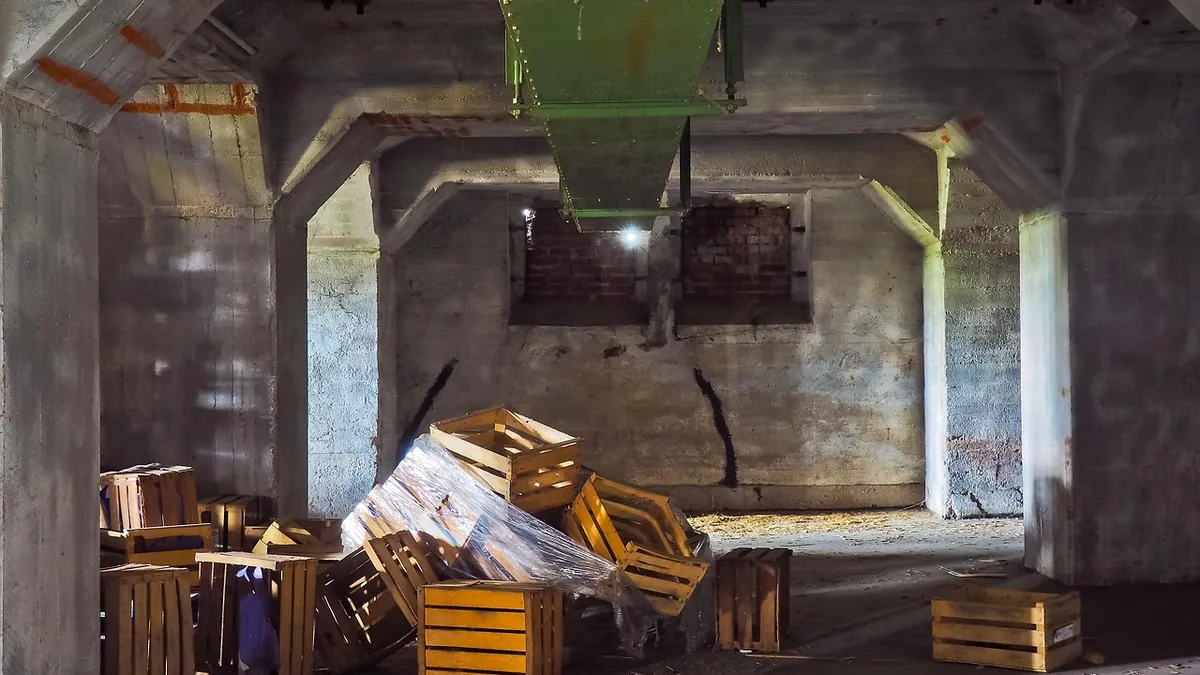
That white, powdery substance appearing on your basement walls is more than just an aesthetic issue. It’s a sign of moisture moving through your masonry, carrying dissolved salts to the surface. This phenomenon, known as efflorescence, is a common concern in basements, crawl spaces, and other areas where concrete or brickwork is exposed to damp conditions. Understanding its nature, causes, and implications is crucial for maintaining the structural integrity and indoor air quality of your home.
This article examines efflorescence on basement walls, differentiating it from other white powders and exploring its connection to dampness and salt damage. We’ll clarify the practical distinctions and overlaps among these related issues, helping you identify the underlying causes and appropriate solutions.
Key Differences Between Efflorescence Basement Walls and White Powder on Wall
While “white powder on wall” might seem like a generic description, in the context of basements, it almost invariably points to efflorescence, or in some cases, mold or mildew. The key distinction lies in the origin and composition of the powder.
Efflorescence is specifically the crystalline deposit of salts left behind when water evaporates from a porous surface like concrete, brick, or mortar. The water acts as a transport mechanism, dissolving soluble salts present within the masonry or the surrounding soil. As this salt-laden water migrates to the surface and evaporates, the salts recrystallize, forming a powdery or fuzzy white, sometimes yellow or brownish, deposit. It’s inorganic, meaning it doesn’t contain living organisms.
“White powder on wall,” when not efflorescence, could be:
- Mold or Mildew: These are organic growths, often appearing fuzzy or slimy, and can be white, gray, black, green, or other colors. They thrive in damp, humid conditions and are characterized by a musty odor. Unlike efflorescence, mold is a living organism and poses health risks.
- Lime Bloom: Similar to efflorescence, but specifically refers to calcium carbonate deposits that form on new concrete or mortar as it cures. While technically a form of efflorescence, it’s often more widespread and less indicative of ongoing moisture intrusion once the material has fully set.
- Paint or Drywall Dust: Less common in basements unless recent work has been done, this would be a fine, dry powder, easily wiped away and not associated with dampness.
The practical implication is that while efflorescence signals a moisture problem, mold indicates a biological growth problem that requires different remediation. Efflorescence itself is generally harmless to health, but its presence is a red flag for underlying moisture issues that can lead to mold, structural damage, and poor indoor air quality.
| Feature | Efflorescence | Mold/Mildew (White Powder Variety) |
|---|---|---|
| Composition | Inorganic salt crystals | Organic fungal growth |
| Appearance | Powdery, crystalline, sometimes fuzzy, gritty | Fuzzy, slimy, powdery, often patchy |
| Color | White, sometimes yellow, brown, or green | White, gray, black, green, or other |
| Odor | Odorless | Often musty, earthy smell |
| Texture | Dry, easily brushed off (reappears if moisture persists) | Can be damp or slimy; difficult to remove completely without cleaning |
| Health Impact | Generally none, but indicates conditions for mold | Can cause respiratory issues, allergies, irritation |
| Moisture Source | Water transporting dissolved salts through masonry | Surface moisture, high humidity, condensation |
| Remediation | Address moisture source, brush/wash off | Address moisture, clean with fungicides/biocides |
Shared Benefits and Overlaps
The “benefits” of efflorescence are not direct in the sense of providing an advantage, but rather in its role as a diagnostic indicator. Its presence offers valuable insights into the condition of your basement and the moisture dynamics at play.
- Early Warning System for Moisture: Efflorescence is often one of the first visible signs of moisture intrusion in a basement. Before damp patches become obvious or mold begins to grow, the white powdery deposits can alert homeowners to an issue. This early detection allows for proactive intervention, potentially preventing more significant and costly damage.
- Indicator of Water Path: The location and pattern of efflorescence can help trace the path of water. For example, if it appears along a wall-floor joint, it might indicate hydrostatic pressure pushing water through the foundation. If it’s concentrated around a pipe, a leak might be the culprit. This diagnostic utility is a critical overlap with understanding “damp masonry” and “basement moisture” in general.
- Reveals Porosity of Materials: The presence of efflorescence confirms that the masonry materials (concrete, brick, mortar) are porous enough for water to penetrate and migrate. This knowledge is important when considering waterproofing strategies, as it confirms the need for solutions that address capillary action and vapor drive.
- Highlights Salt Content: The very existence of efflorescence confirms the presence of soluble salts within the building materials or surrounding soil. This is a direct overlap with “salt deposits concrete,” and understanding these salts can inform material choices for repairs or new construction to minimize future issues.
The overlap between “efflorescence basement walls,” “white powder on wall,” “damp masonry,” and “salt deposits concrete” is considerable. Efflorescence IS a white powder on the wall, and it IS composed of salt deposits on concrete (or other masonry), and it IS a direct consequence of damp masonry caused by basement moisture. These terms are interconnected, describing different facets of the same underlying problem: water moving where it shouldn’t be.
When Efflorescence Basement Walls May Be a Better Fit
The term “efflorescence basement walls” is most appropriate and specifically useful when you’ve observed the characteristic white, powdery, crystalline deposits on your basement’s concrete or masonry surfaces, and you suspect an underlying moisture issue.
- Identifying a Specific Phenomenon: If you’re observing distinct, often sparkling or gritty, white deposits that brush off easily but tend to reappear, the specific term “efflorescence” is more accurate than the general “white powder.” This precision is helpful when discussing the issue with contractors or researching solutions, as it immediately points to a salt-related moisture transport problem.
- Investigating Moisture Sources: When your primary concern is to pinpoint the source of moisture intrusion in your basement, efflorescence is a key indicator. Its location and severity can guide your investigation. For instance, efflorescence high on a wall might suggest a leaking window or exterior drainage issue, whereas efflorescence at the base of the wall points to groundwater pressure or slab issues.
- Assessing Material Degradation Risk: While efflorescence itself is primarily aesthetic, the continuous cycle of salt crystallization and dissolution can, over time, cause sub-efflorescence (crystallization within the masonry) which can exert pressure and lead to spalling, crumbling, and other forms of material degradation. Using the term “efflorescence” helps frame the problem in terms of potential long-term structural impact, especially in older homes or unsealed basements.
- Planning Remediation Strategies: When preparing to address the problem, understanding that it’s efflorescence dictates a two-pronged approach: removing the visible salts and, more importantly, eliminating the moisture source. If you merely clean the “white powder” without addressing the dampness, the efflorescence will return. Therefore, “efflorescence basement walls” is a better fit when you’re moving beyond simple observation to problem resolution.
For example, a homeowner noticing efflorescence on their basement walls after heavy rain might infer that exterior grading or gutter issues are allowing water to pool near the foundation, leading to moisture wicking through the concrete. This understanding helps them decide whether to regrade their yard or repair their gutters, rather than just scrubbing the walls.
When White Powder on Wall May Be a Better Fit
The broader term “white powder on wall” becomes more useful when the nature of the white substance is uncertain, or when the focus is on a more general symptom that could have multiple causes.
- Initial Observation and Uncertainty: If you’ve just noticed a white substance on your wall and are unsure if it’s efflorescence, mold, or something else entirely, “white powder on wall” serves as a neutral starting point for describing the symptom. It avoids misdiagnosis and keeps open the possibility of various underlying issues.
- Communicating a General Symptom: When you’re describing a problem to someone who isn’t familiar with building science or specific terminology, “white powder on wall” is easily understood. It allows for a more accessible conversation before delving into technical explanations. For example, telling a friend, “I have some white powder on my basement wall,” is a good initial description before you’ve had a chance to investigate further.
- Considering Multiple Potential Causes: If the white powder is accompanied by other symptoms, such as a musty smell (suggesting mold), or if it appears in areas less prone to moisture intrusion (like an interior wall), “white powder on wall” allows for a broader diagnostic approach. It prompts consideration of condensation, inadequate ventilation, or even previous construction dust, in addition to efflorescence.
- Seeking General Advice: When performing an initial search online or asking for general advice, “white powder on wall” might yield a wider range of potential causes and solutions. While less specific, it can be a good starting point for general troubleshooting before narrowing down to a specific issue like efflorescence.
For instance, if a homeowner sees a white powdery substance on an interior basement wall that doesn’t appear damp to the touch, they might initially use “white powder on wall” to describe it. This could lead them to consider possibilities beyond just groundwater intrusion, such as a plumbing leak within the wall or even a poorly ventilated area leading to condensation.
How to Choose Based on Goals and Context
Choosing the right terminology depends on what you aim to achieve and the specific details of your situation. The table below outlines how your goals and the context of the observation can guide your choice.
| Goal / Context | Best Term to Use | Rationale |
|---|---|---|
| Initial observation, unsure of cause | White powder on wall | Neutral, broad term; allows for multiple diagnostic paths (efflorescence, mold, dust, etc.). |
| Identifying a specific salt crystal deposit | Efflorescence basement walls | Precise; indicates inorganic salt crystals from moisture evaporation; points to underlying moisture transport. |
| Diagnosing source of moisture intrusion | Efflorescence basement walls, Damp masonry, Basement moisture | Efflorescence pinpoints location; damp masonry confirms water presence; basement moisture is the overarching problem. |
| Discussing with a waterproofing contractor | Efflorescence basement walls, Damp masonry, Salt deposits concrete | Precise terms demonstrate understanding of the issue; helps contractor understand the scope and nature of the problem for tailored solutions. |
| Concerned about structural integrity | Efflorescence basement walls, Salt damage concrete | Efflorescence, particularly recurring or severe, can indicate salt damage which weakens masonry over time. |
| Concerned about indoor air quality/health | White powder on wall (initially), then differentiate between Efflorescence and Mold | Start broad, then narrow down. If it’s mold, health is a primary concern. Efflorescence itself isn’t a health risk but indicates conditions for mold. |
| Seeking DIY cleaning advice only | White powder on wall, Efflorescence | If you just want to clean it off (even if it returns), either term works for finding cleaning methods. For long-term solutions, efflorescence is better. |
| Explaining to a non-expert | White powder on wall | Simple, universally understood. Can follow up with “It’s called efflorescence, which means…” for more detail. |
Ultimately, the most effective approach often involves starting with the broader term (“white powder on wall”) when initial observations are made, then refining to the more specific “efflorescence basement walls” as you gather more information and rule out other possibilities. When you confirm it’s efflorescence, addressing the “damp masonry” and the underlying “basement moisture” becomes paramount. Ignoring it can lead to worsening “salt damage concrete” and potentially more severe issues.
The context of your “goals” is crucial. If your goal is simply to understand what that white stuff is, starting broad is fine. If your goal is to fix a persistent problem, you need to be specific to identify the root cause and effective solutions.
Frequently Asked Questions
What is efflorescence basement walls?
Efflorescence on basement walls is the white, powdery, crystalline deposit of salts that forms on the surface of concrete, brick, or mortar. It occurs when water containing dissolved salts moves through porous masonry, reaches the surface, and then evaporates, leaving the salts behind as a visible residue. It’s a clear indicator of moisture intrusion and movement within the building materials.
How does efflorescence basement walls compare with alternatives?
Efflorescence is distinct from other white powders you might find. Unlike mold or mildew, which are organic growths and often have a musty odor, efflorescence is an inorganic salt deposit, typically odorless and gritty. It’s also different from simple dust or lime bloom (which is a specific type of efflorescence on new concrete). The key comparison is that efflorescence signals a moisture transport problem, whereas mold signals a biological growth problem, both of which stem from damp conditions but require different remediation strategies. While efflorescence itself is largely aesthetic, it’s a symptom that can lead to other, more damaging issues if the underlying moisture isn’t addressed.
What are the most common mistakes people make with efflorescence basement walls?
The most common mistake is treating efflorescence as purely an aesthetic problem and simply cleaning it off without addressing the underlying moisture source. This leads to its inevitable return. Other mistakes include:
- Ignoring it: Allowing moisture to continuously move through masonry can lead to structural degradation over time (salt damage, spalling).
- Misdiagnosing it: Confusing efflorescence with mold can lead to ineffective treatments and potential health issues if mold is present.
- Using improper cleaning methods: Harsh chemicals or abrasive cleaning can damage the masonry surface. Simple brushing and vacuuming, followed by a light acidic wash (like diluted vinegar), is often sufficient for removal, but only after the moisture source is controlled.
- Applying sealants too soon: Sealing over efflorescence or damp masonry can trap moisture, potentially worsening the problem or causing sub-efflorescence (salt crystallization within the masonry, leading to spalling). The wall must be dry and the moisture source mitigated before sealing.
- Overlooking exterior factors: Many basement moisture problems, and thus efflorescence, originate from exterior issues like poor drainage, clogged gutters, or improper grading, which are often overlooked in favor of interior solutions.
Conclusion
The presence of efflorescence on basement walls is a clear signal that moisture is at work within your home’s foundation. While the white powder itself is generally benign, it’s a critical indicator of underlying dampness and the movement of salts, which can lead to more serious issues like structural damage, mold growth, and compromised indoor air quality if left unaddressed.
Understanding the distinction between “efflorescence basement walls” and other “white powder on wall” scenarios, and recognizing its direct connection to “damp masonry” and “salt deposits concrete,” empowers homeowners to accurately diagnose the problem. The most effective course of action always involves identifying and mitigating the moisture source, whether it’s through improved exterior drainage, foundation crack repair, or proper ventilation. By addressing the root cause, you not only eliminate the unsightly efflorescence but also protect the long-term health and integrity of your basement and your home.
DIY safety disclaimer
Home Leak Fix publishes general DIY information for homeowners. Water intrusion can involve structural, electrical, height, mould, or insurance risks. Use proper safety equipment, follow local building rules, and call a qualified professional when a repair is unsafe, unclear, or beyond your experience.