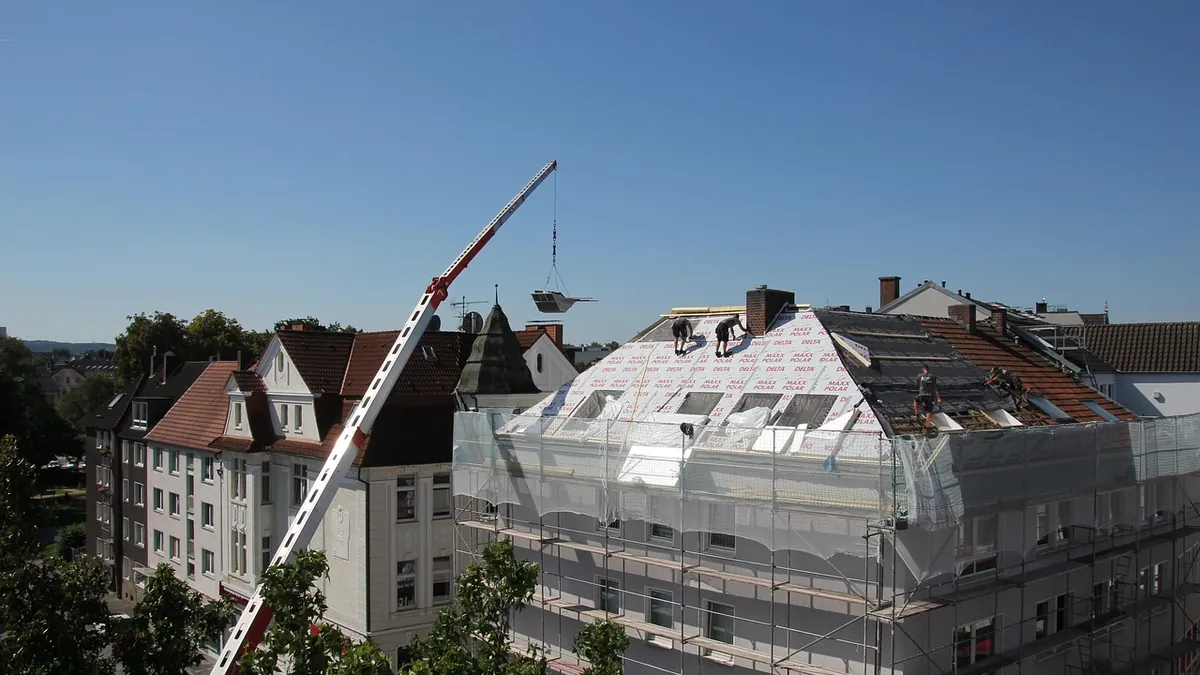
Ensuring a roof terrace remains watertight is fundamental to its longevity and the structural integrity of the building beneath it. This isn’t just about preventing leaks; it’s about protecting the building from moisture ingress that can lead to costly damage, mold growth, and compromised insulation. The process involves a considered approach to materials and application, typically revolving around robust waterproofing solutions designed to withstand environmental stressors and pedestrian traffic. These solutions generally fall into categories of sheet membranes, liquid-applied coatings, and integrated systems often finished with protective topcoats. Each approach offers distinct advantages and considerations for different project requirements and environmental conditions.
Key Differences Between Roof Terrace Waterproofing and Terrace Membrane
While often used interchangeably, “roof terrace waterproofing” is a broad term encompassing various strategies, whereas “terrace membrane” refers to a specific type of material used within a waterproofing system. Understanding this distinction is crucial for proper specification and installation.
Roof terrace waterproofing, in its entirety, is the system designed to prevent water penetration into the structure below a terrace. This system can involve multiple layers, including a structural deck, a vapor barrier, insulation, the primary waterproofing layer, drainage layers, and a wearing surface. The goal is complete moisture management, not just a single barrier. It addresses aspects like drainage, thermal movement, and structural loads.
A terrace membrane, on the other hand, is one of the primary waterproofing layers within this broader system. It’s typically a pre-formed sheet or a liquid-applied material that cures to form a continuous, impermeable barrier. These membranes are engineered for flexibility, UV resistance (if exposed), and durability under the intended surface finish.
For example, a project might specify a “roof terrace waterproofing system” that utilizes an EPDM (ethylene propylene diene monomer) rubber membrane as its primary waterproof layer. Here, the EPDM is the “terrace membrane,” but it’s only one component of the entire “waterproofing system” that includes proper substrate preparation, flashing details, and a protective overlay like pavers or decking. Another project might use a liquid-applied polyurethane coating as its primary waterproofing, which, while forming a membrane-like layer, is often referred to as a “liquid membrane” or “coating” rather than a traditional “sheet membrane.”
The practical implications of this distinction lie in scope and responsibility. When discussing “waterproofing,” one considers the entire assembly’s performance. When discussing a “membrane,” the focus narrows to the properties and installation of that specific barrier material. A failure in the overall waterproofing system might be due to a faulty membrane, but it could also be due to improper substrate preparation, inadequate flashing, or poor drainage, even if the membrane itself performed as specified.
Shared Benefits and Overlaps
Despite their distinct definitions, both the overarching concept of roof terrace waterproofing and the specific application of terrace membranes share fundamental benefits and often overlap in their functional purpose. Their primary shared benefit is protection against water ingress, safeguarding the building’s structural integrity, preventing mold and mildew, and preserving interior finishes.
Both approaches aim to create a continuous, impermeable barrier that sheds water effectively. This continuity is critical; even the most robust membrane will fail if its seams are compromised or if it’s not properly integrated with vertical surfaces (parapets, walls) and penetrations (drains, pipes).
For instance, whether a project uses a PVC sheet membrane or a liquid-applied polymer coating, both function as the primary line of defense against water. They are engineered to be resilient to ponding water, thermal expansion and contraction, and foot traffic (either directly or beneath a wearing course). Both require a properly prepared substrate for optimal adhesion and performance. Without a clean, dry, and stable surface, even high-quality materials can underperform.
Another overlap lies in the need for protection. Many waterproofing membranes, especially those not formulated for direct UV exposure or heavy traffic, require a protective layer. This could be a drainage mat, insulation board, or a wearing course like pavers or composite decking. This protective layer shields the membrane from mechanical damage, UV degradation, and extreme temperature fluctuations, extending its lifespan. A liquid-applied system might have an integrated protective topcoat that is part of the waterproofing system itself, often providing color, slip resistance, and enhanced UV stability. In essence, the goal is always to create a durable, long-lasting barrier, regardless of whether it’s achieved with a pre-fabricated sheet or a liquid-applied material.
When Roof Terrace Waterproofing May Be a Better Fit
The broader concept of “roof terrace waterproofing” is particularly relevant when considering the entire building envelope and the long-term performance of the terrace as an integrated system. It’s not just about the barrier material but the comprehensive design and execution.
This integrated approach becomes crucial in complex architectural designs featuring multiple levels, intricate drainage patterns, or where the terrace serves as a critical structural element. For instance, a high-rise building with a large communal roof terrace above occupied spaces demands a holistic waterproofing strategy. Here, a “roof terrace waterproofing” approach would involve:
- Engineering Consultation: Engaging structural engineers, architects, and waterproofing specialists from the outset to design a multi-layered system. This includes specifying substrate preparation, vapor barriers, insulation, the primary waterproofing layer (which could be a membrane or coating), drainage components, and the final wearing surface.
- Performance Guarantees: Seeking comprehensive warranties that cover the entire system, not just individual components. This shifts the focus from a single material’s performance to the overall system’s effectiveness.
- Long-term Durability: Prioritizing systems designed for exceptional longevity, often exceeding 20-30 years, given the high cost and disruption associated with repairs on occupied buildings. This often means investing in higher-grade materials and more meticulous installation processes.
- Traffic and Load Considerations: When the terrace is expected to bear heavy loads (e.g., planters, furniture, high pedestrian traffic, or even vehicle access for maintenance), the entire waterproofing system needs to be robust. This includes the substrate, the waterproofing layer, and the protective wearing course, all designed to distribute loads effectively and prevent damage to the underlying waterproof barrier.
Consider a commercial project where a roof terrace is designed as a public amenity space, complete with landscaping, water features, and significant pedestrian traffic. Here, a mere “terrace membrane” wouldn’t suffice as a descriptive term. The project requires a fully engineered “roof terrace waterproofing system” that integrates structural considerations, drainage design, thermal performance, and a robust, multi-layered approach to moisture management, all culminating in a durable and aesthetically pleasing public space. The emphasis is on the synergy of all components working together to achieve a specific performance standard.
When Terrace Membrane May Be a Better Fit
Focusing specifically on a “terrace membrane” is often more appropriate when the primary concern is the selection and application of the core waterproofing barrier within a pre-defined or simpler structural context. This perspective is useful when replacing an existing membrane, or for projects where the overall system design is less complex.
This narrower focus is particularly suitable for:
- Renovation Projects: When an existing roof terrace needs re-waterproofing, and the underlying structure, insulation, and drainage system are largely sound. The task then primarily revolves around removing the old membrane and installing a new one. For example, replacing a failed EPDM membrane on a residential terrace with a new TPO (thermoplastic polyolefin) membrane. The scope is clearly defined around the membrane itself.
- Standardized Designs: For projects with relatively straightforward geometry, minimal penetrations, and a conventional wearing surface (e.g., pedestal-supported pavers). In these cases, the choice of membrane type (e.g., PVC, TPO, EPDM, modified bitumen) becomes the central decision point, based on factors like cost, durability, ease of installation, and compatibility with the existing structure.
- Specific Material Performance: When the unique properties of a particular membrane material are the deciding factor. For instance, if chemical resistance is paramount, a specific type of PVC membrane might be chosen. If extreme flexibility in cold temperatures is needed, an EPDM membrane could be the preference.
- Cost-Efficiency for Simpler Projects: For smaller residential terraces or balconies where an overly complex, multi-layered system might be overkill. A robust, single-ply membrane, properly installed with appropriate flashing, can provide effective waterproofing at a more accessible cost point.
Imagine a homeowner renovating their second-story balcony. The concrete slab is sound, and they plan to install new tile over a drainage mat. Their primary concern is selecting a “terrace membrane” that is compatible with the tile adhesive, resistant to ponding water, and durable enough for light foot traffic. They might choose a liquid-applied membrane that can be seamlessly coated over the existing, prepared concrete, or a sheet membrane specifically designed for under-tile applications. The focus here is on the material providing the waterproof barrier, a specific component rather than the entire system’s engineering.
How to Choose Based on Goals and Context
Selecting the right waterproofing strategy for a roof terrace—whether focusing on a comprehensive system or a specific membrane—depends heavily on project goals, budget, anticipated use, and environmental context. There’s no one-size-fits-all solution; careful evaluation is key.
To make an informed decision, consider the following factors:
- Building Type and Occupancy: Is it a residential balcony, a commercial restaurant terrace, or a public plaza above critical infrastructure? The consequences of failure dictate the level of redundancy and quality required. A hospital roof terrace, for example, demands the highest level of waterproofing assurance.
- Budget and Lifespan Expectations: Initial cost versus long-term value. While a high-performance system may have a higher upfront cost, its extended lifespan and reduced maintenance needs can offer significant savings over decades.
- Substrate Condition and Type: Is the existing substrate concrete, wood, or metal? Its condition will influence preparation requirements and membrane compatibility. A new construction project offers more flexibility in substrate choice.
- Climate and Environmental Exposure: Extreme temperatures, heavy rainfall, UV exposure, and freeze-thaw cycles all impact material selection. Some membranes perform better in cold climates, while others excel in hot, sunny environments.
- Traffic and Load Requirements: High foot traffic, heavy planters, or even occasional vehicle access necessitate a more robust system, potentially with additional protection layers over the primary waterproofing.
- Aesthetics and Finish: The final appearance of the terrace (e.g., pavers, decking, green roof) will influence the choice of the waterproofing system, especially if the membrane needs to be exposed or compatible with specific wearing courses.
- Installation Complexity and Access: Large, complex geometries or limited access can favor liquid-applied systems that adapt more easily to irregular shapes. Sheet membranes often require precise cutting and seaming.
- Warranty and Installer Expertise: A comprehensive warranty from a reputable manufacturer and an experienced, certified installer are critical for long-term peace of mind.
The table below provides a comparative overview of common waterproofing approaches for roof terraces, highlighting key characteristics to aid in decision-making.
| Feature | Sheet Membranes (e.g., PVC, TPO, EPDM) | Liquid-Applied Coatings (e.g., Polyurethane, PMMA, Acrylic) | Hybrid Systems (e.g., Bituminous with liquid topcoat) |
|---|---|---|---|
| Material Form | Pre-fabricated rolls, installed in overlapping sheets | Applied as a liquid, cures to form a seamless membrane | Often a rolled base layer (e.g., modified bitumen) with a liquid-applied topcoat |
| Seams | Present, require welding/adhering; potential point of failure if not done well | Seamless, monolithic barrier (except at expansion joints) | Seams in base layer, often sealed and protected by liquid topcoat |
| Application | Mechanical fastening, ballasting, or full adhesion | Spray, roller, or trowel; typically multi-coat | Torch-applied or self-adhered base, then liquid application |
| Flexibility | High, accommodates structural movement | Excellent, adapts to irregular shapes and penetrations | Good, depends on base and topcoat properties |
| Durability | Very good; often requires protection from UV/traffic | Excellent, especially with integrated topcoats for UV/abrasion resistance | Good, often robust against punctures |
| Maintenance | Relatively low, but repairs can be visible | Low, repairs can be integrated seamlessly | Moderate, base layer can be harder to repair |
| Cost | Moderate to High | Moderate to High | Moderate |
| Best For | Large, flat areas; new construction; standardized designs | Complex geometries; renovations; high traffic areas; exposed applications | Cost-effective solutions; areas requiring robust base layer and seamless finish |
| Considerations | Seam integrity is crucial; requires skilled installers | Substrate prep critical; curing times; ventilation during application | Odor during application; requires skilled installers for torch-applied systems |
Ultimately, the best approach integrates a suitable membrane or coating into a well-designed system, installed by experienced professionals. This ensures the roof terrace remains a functional and protected asset for years to come.
Frequently Asked Questions
What is roof terrace waterproofing?
Roof terrace waterproofing is the comprehensive process of creating a watertight barrier and drainage system on a roof terrace to prevent water from penetrating the building structure below. It involves multiple layers and components, including the primary waterproofing material (membrane or coating), insulation, drainage elements, and a protective wearing surface, all designed to manage moisture and protect the building.
How does roof terrace waterproofing compare with alternatives?
Roof terrace waterproofing isn’t typically compared with alternatives in the sense of different solutions for the same problem, but rather within alternatives of waterproofing materials and systems. Unlike a standard flat roof, which might only require a basic waterproof membrane and ballast, a roof terrace demands a system robust enough to withstand regular foot traffic, potential heavy loads (planters, furniture), and often incorporates aesthetic finishes like pavers or decking. The alternatives are primarily different types of membranes (e.g., sheet membranes like PVC, TPO, EPDM, or modified bitumen) or liquid-applied coatings (e.g., polyurethane, PMMA, acrylic), each offering different properties in terms of flexibility, durability, ease of application, and cost. The “alternative” is often a different system design or material choice within the overarching goal of waterproofing.
What are the most common mistakes people make with roof terrace waterproofing?
Several common mistakes can compromise the effectiveness and longevity of roof terrace waterproofing:
- Inadequate Substrate Preparation: Failing to clean, dry, and prime the substrate properly can lead to poor adhesion of membranes or coatings, causing delamination.
- Improper Detailing at Penetrations and Upstands: Most leaks occur at critical junctions like drains, pipe penetrations, and where the waterproofing meets vertical walls (upstands/parapets). Insufficient flashing, poor sealing, or incorrect termination points are frequent failure points.
- Lack of Drainage: Insufficient slopes or blocked drains can lead to ponding water, which stresses the waterproofing material and can accelerate its degradation, even if the material is designed for immersion.
- Skipping Protective Layers: Many membranes are not designed for direct UV exposure or heavy traffic. Omitting a protective topcoat, drainage mat, or wearing course can expose the primary waterproofing to damage, leading to premature failure.
- Poor Material Selection: Choosing a waterproofing material unsuitable for the climate, expected traffic, or chemical exposure (e.g., from cleaning products or landscaping) will lead to performance issues.
- Inexperienced Installation: Waterproofing is a specialized trade. DIY attempts or using untrained installers often result in critical errors that are costly to rectify later.
- Ignoring Thermal Movement: Buildings expand and contract with temperature changes. Failing to incorporate proper expansion joints or using materials that cannot accommodate this movement can cause cracking or delamination of the waterproofing.
Conclusion
Waterproofing a roof terrace is a critical investment in a building’s longevity and functionality. It moves beyond simply selecting a material; it requires a holistic understanding of the building’s structure, environmental conditions, and intended use. Whether the project calls for a robust, multi-layered system designed for high traffic and complex aesthetics, or a targeted membrane replacement for a simpler renovation, the principles remain the same: meticulous preparation, appropriate material selection, proper detailing, and skilled installation are paramount. For anyone involved in specifying, designing, or installing roof terraces, a thorough investigation into these factors will yield a durable, watertight, and ultimately successful outcome.
DIY safety disclaimer
Home Leak Fix publishes general DIY information for homeowners. Water intrusion can involve structural, electrical, height, mould, or insurance risks. Use proper safety equipment, follow local building rules, and call a qualified professional when a repair is unsafe, unclear, or beyond your experience.