Waterproofing around pipe penetrations in bathrooms is a critical aspect of preventing water damage, mold growth, and structural issues. These points where pipes pass through walls, floors, or ceilings are inherent vulnerabilities in any wet area. Without proper sealing, water can seep behind finishes, travel along pipe surfaces, and compromise the integrity of building materials. Understanding the various methods and their applications is essential for anyone involved in bathroom construction or renovation, from DIY enthusiasts to professional builders.
Key Differences Between Waterproofing Pipe Penetrations Bathroom and Pipe Collar Waterproofing
While often discussed interchangeably, “waterproofing pipe penetrations bathroom” broadly refers to the entire strategy of sealing these points, whereas “pipe collar waterproofing” is a specific, widely used method within that strategy.
Waterproofing pipe penetrations in a bathroom involves a comprehensive approach to isolate the pipe from the surrounding building materials. This includes preparing the surface, applying a waterproofing membrane, and then specifically addressing the pipe’s entry point. The goal is to create a continuous, impervious barrier that water cannot breach. This might involve liquid-applied membranes, sheet membranes, or a combination of products. The scope extends to ensuring the entire waterproofing system—from floor to wall junctions, internal corners, and horizontal surfaces—is integrated and effective.
Pipe collar waterproofing, in contrast, involves using pre-formed or custom-fabricated seals made to fit snugly around a pipe. These collars are typically constructed from flexible, waterproof materials such as rubberized asphalt, polyethylene, or reinforced fabric. Their purpose is to form a tight, durable seal precisely where the pipe penetrates the substrate. The collar is generally integrated into or adhered over the primary waterproofing membrane, ensuring a seamless connection between the membrane and the pipe.
The practical implications of this distinction are significant. A general waterproofing strategy for pipe penetrations could involve simply building up layers of liquid membrane around the pipe, overlapping the main membrane. While this can work, it often relies heavily on the skill of the applicator to achieve uniform thickness and adhesion, especially in tight spaces. The risk of pinholes, thin spots, or inadequate bond to the pipe surface is higher.
Conversely, using a dedicated pipe collar provides a more controlled and often more reliable seal. The collar’s pre-engineered shape ensures a consistent fit around the pipe, and its material is chosen for its adhesion properties to both the pipe and the surrounding membrane. This reduces the variability associated with purely liquid-applied methods at this specific, critical junction. Edge cases might include unusually shaped pipes or very small clearances, where a standard collar may not fit, requiring a more customized, site-fabricated approach, often still involving a flexible, reinforced material.
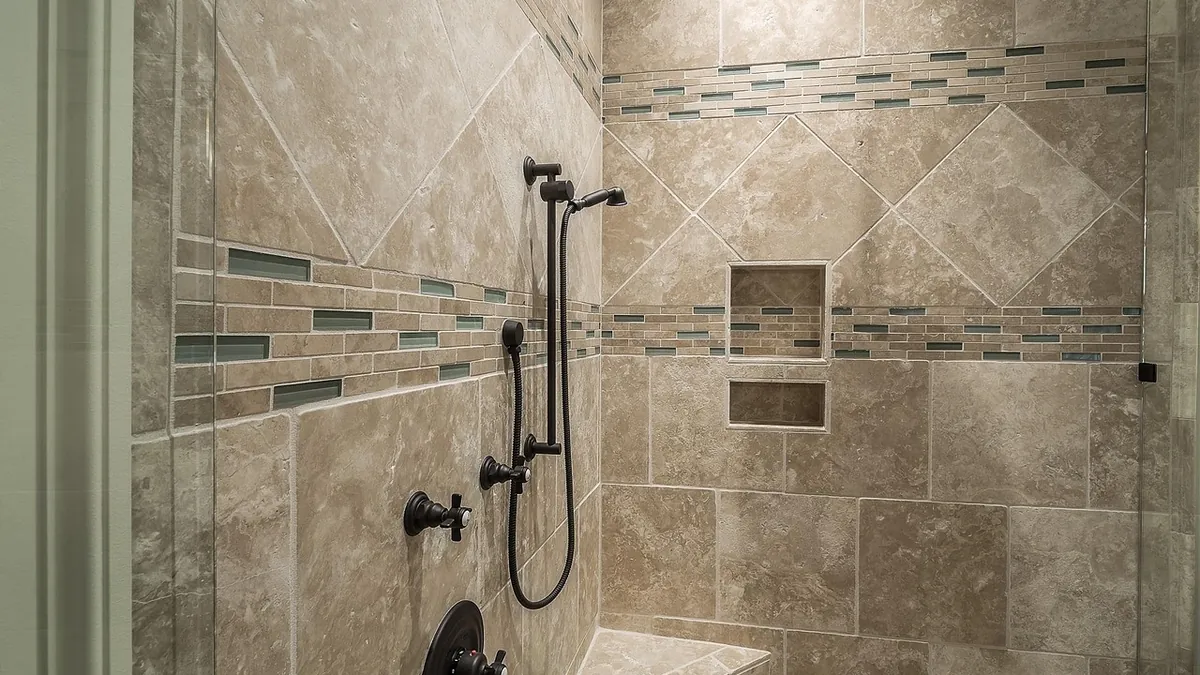
For example, when installing a shower mixer valve, the hot and cold supply pipes, as well as the showerhead pipe, will penetrate the wall. A comprehensive waterproofing strategy would involve applying a liquid membrane to the entire shower area. For each pipe, a pipe collar—a pre-formed rubber or fabric-backed disc with a hole for the pipe—would be slid over the pipe and then embedded into the fresh liquid membrane or adhered with a compatible sealant. This ensures that the membrane is effectively “wrapped” around the pipe, creating a watertight seal at that exact point. Without the collar, relying solely on multiple brush coats of liquid membrane around the pipe would be less robust and more prone to failure over time due to differential movement or shrinkage.
Shared Benefits and Overlaps
Both general waterproofing strategies for pipe penetrations and the specific use of pipe collars share fundamental benefits, all centered around preventing water intrusion. The primary goal is to protect the building structure from moisture. Water seeping through unsealed penetrations can lead to a cascade of problems:
- Structural Damage: Constant exposure to moisture can weaken wooden studs, floor joists, and subflooring, leading to rot and compromising the structural integrity of the bathroom and adjacent areas. Concrete and masonry can also suffer damage from freeze-thaw cycles if water infiltrates.
- Mold and Mildew Growth: Damp, dark environments behind walls and under floors are ideal breeding grounds for mold and mildew. These not only cause unpleasant odors and unsightly stains but can also pose health risks, particularly for individuals with allergies or respiratory conditions.
- Pest Infestations: Moist, decaying wood attracts pests like termites and carpenter ants, which can further exacerbate structural damage.
- Reduced Indoor Air Quality: Mold spores circulating in the air can degrade indoor air quality.
- Costly Repairs: Addressing water damage and mold after it has occurred is often far more expensive and disruptive than implementing proper waterproofing from the outset. This can involve tearing out walls, replacing framing, and extensive remediation.
Both approaches aim to create a continuous, impervious barrier that prevents water from migrating from the wet side (e.g., shower interior) to the dry side (e.g., wall cavity). They achieve this by ensuring that the waterproofing layer is not interrupted by the pipe itself.
The overlap lies in their integrated application. A pipe collar is not a standalone waterproofing solution; it’s a critical component within a larger waterproofing system. It works in conjunction with the primary waterproofing membrane (whether liquid-applied or sheet-based) to ensure continuity. The collar effectively bridges the gap between the pipe and the main membrane, creating a robust, flexible, and durable seal. This integration is crucial because any break in the waterproofing layer, no matter how small, can become a pathway for water.
Consider a scenario where a shower valve body is installed in a tiled wall. The hot and cold water pipes, along with the shower arm connection, penetrate the backer board. The general waterproofing strategy for this shower enclosure involves applying a waterproof membrane to all walls and the floor. The pipe collars, specifically designed for these plumbing fixtures, are then applied over the pipes and seamlessly integrated with the main membrane. This creates a continuous, watertight envelope around the valve body and its connections, ensuring that any water that gets behind the tiles cannot penetrate the wall cavity. Without the collars, even a perfectly applied liquid membrane might shrink or crack around the rigid pipes over time, allowing water to pass.
When Waterproofing Pipe Penetrations Bathroom May Be a Better Fit
The broader strategy of “waterproofing pipe penetrations bathroom” without necessarily relying solely on pre-formed collars might be a better fit in specific situations, particularly when dealing with non-standard pipe configurations, very tight spaces, or when using certain types of waterproofing systems.
One key scenario is when custom or irregular penetrations are involved. Standard pipe collars are typically designed for common pipe diameters (e.g., 1/2", 3/4", 1", 2" PVC, copper). If a bathroom design includes an unusual pipe size, a square conduit, or multiple pipes clustered very closely together where a standard circular collar wouldn’t fit, a custom-fabricated approach becomes necessary. In such cases, the applicator might use a cut-to-size piece of flexible waterproofing membrane (e.g., a fabric-reinforced patch from a sheet membrane system) that is carefully shaped and adhered around the penetration. This requires more skill and attention to detail but offers greater flexibility.
Another instance is when using certain liquid-applied waterproofing membranes that are inherently designed for seamless application. Some high-performance, elastomeric liquid membranes are formulated to provide excellent adhesion to various substrates, including plastics and metals. When applied with sufficient build-up and careful technique around a pipe, these membranes can form a durable, monolithic seal without the need for a separate collar. This might be preferred in situations where the membrane manufacturer specifies this method, or where the applicator is highly experienced with the particular product and its ability to bridge small gaps and adhere effectively to the pipe surface. The trade-off here is that the quality of the seal is highly dependent on the skill of the installer, as uniform thickness and coverage in all contours are paramount.
Furthermore, in extremely tight clearances where there might not be enough space to slide a pre-formed collar over the pipe, a liquid-applied or cut-to-size membrane patch might be the only practical solution. This could happen in renovations where pipes are very close to existing framing or other obstructions.
Consider a bathroom renovation where an old cast-iron drain pipe for a pedestal sink is being retained, and it’s an unusual diameter, say 2.5 inches. Finding a pre-formed collar for this specific size might be difficult or impossible. In this situation, the general waterproofing strategy would involve applying the main liquid membrane to the floor. Then, a piece of flexible, fabric-reinforced waterproofing membrane, perhaps from a roll, would be cut to size, with a hole carefully made in its center to fit snugly around the cast-iron pipe. This patch would then be embedded into a layer of liquid membrane, ensuring generous overlap onto both the pipe and the surrounding floor membrane, effectively creating a custom collar on-site. This method provides the necessary waterproofing without being constrained by standard collar sizes.
In summary, while pre-formed collars offer convenience and reliability, the broader concept of “waterproofing pipe penetrations bathroom” allows for adaptability and custom solutions when standard products don’t fit the specific demands of a project.
When Pipe Collar Waterproofing May Be a Better Fit
Pipe collar waterproofing, specifically using pre-formed or purpose-designed collars, often presents a more reliable and efficient solution for sealing pipe penetrations in bathrooms, particularly in common scenarios.
The most compelling reason to use pipe collars is for standardized pipe sizes and configurations. Most plumbing pipes (e.g., PEX, copper, PVC) come in standard diameters. Manufacturers produce collars specifically sized for these common dimensions, ensuring a snug fit. This makes the installation process faster and less prone to error compared to attempting to hand-fabricate a seal with liquid membrane or sheet material. The consistency of a factory-made collar often translates to a more robust and durable seal.
Pipe collars are also particularly well-suited for high-movement areas or where there is a potential for differential expansion and contraction between the pipe and the surrounding substrate. Pipes, especially those carrying hot water, can expand and contract with temperature changes. A rigid waterproofing layer applied directly to the pipe might crack or delaminate over time due. Pipe collars are typically made from elastomeric materials that can accommodate this movement without compromising the seal. They maintain their integrity even when the pipe shifts slightly within the penetration.
Furthermore, collars provide a significant advantage in ensuring uniform thickness and coverage around the pipe. Achieving an even, consistent layer of liquid membrane around a circular pipe, especially at the base where it meets the wall or floor, can be challenging. A pre-formed collar, however, provides a consistent thickness and a defined shape that simplifies proper integration with the main waterproofing membrane. This reduces the risk of thin spots or voids that could become leak pathways.
Consider the installation of a standard toilet flange. The 3-inch or 4-inch drain pipe penetrates the bathroom floor. A specialized toilet flange collar, often a robust rubber or PVC gasket, is designed to fit precisely around the toilet flange and integrate with the floor waterproofing membrane. This collar ensures that any water, perhaps from an overflowing toilet or a leak at the wax ring, does not seep down around the drain pipe into the subfloor. Relying solely on a liquid membrane here would be less effective, as the large diameter and potential for movement make a pre-formed, flexible collar a superior choice for long-term reliability.
Another example is in shower installations where the shower arm and valve body pipes penetrate the wall. Using specific pipe collars for these connections, often integrated with the primary waterproofing membrane, provides a precise and durable seal. The collar prevents water from migrating along the pipe threads or gaps into the wall cavity, even with the constant water exposure in a shower.
In essence, for common plumbing installations and where long-term flexibility and consistent application are priorities, dedicated pipe collars offer a superior and more reliable waterproofing solution.
How to Choose Based on Goals and Context
Selecting the appropriate method for waterproofing pipe penetrations in a bathroom hinges on balancing several factors: the specific type of penetration, the waterproofing system being used, the installer’s skill level, and the budget. There isn’t a one-size-fits-all answer; instead, it’s about making an informed decision for each unique situation.
Here’s a comparison table to help guide the decision-making process:
| Feature/Consideration | General Waterproofing (Liquid membrane/cut patch) | Pipe Collar Waterproofing (Pre-formed collars) |
|---|---|---|
| Penetration Type | Irregular shapes, very tight spaces, clustered pipes, non-standard diameters. | Standard pipe diameters (1/2", 3/4", 1", 2", 3", 4"), toilet flanges, shower valves. |
| Ease of Installation | Requires higher skill, careful detailing, multiple coats, and precise cutting. More time-consuming for each penetration. | Generally easier and faster for standard sizes. Less skill required for consistent application. |
| Reliability/Durability | Highly dependent on applicator skill. Can be reliable if executed perfectly, but higher risk of inconsistencies. | High reliability due to factory-engineered fit and material properties. Better at accommodating movement. |
| Material Compatibility | Must ensure liquid membrane adheres well to both pipe material and substrate. | Collars are typically designed for broad compatibility with common pipe and membrane materials. |
| Cost (Per Penetration) | Potentially lower material cost if using bulk liquid membrane, but higher labor cost for meticulous detailing. | Higher material cost per collar, but lower labor cost due to quicker installation. |
| Flexibility/Movement | Can be good if using highly elastomeric liquid membranes; less effective if membrane is rigid. | Excellent, as collars are typically made from flexible, elastomeric materials. |
| Common Use Cases | Custom shower benches with unusual drains, very old plumbing systems with non-standard pipe sizes, specific manufacturer waterproofing systems that don’t use collars. | Showers (valve bodies, shower arms), bathtubs (overflow, drain), sinks (supply lines, drains), toilets (drain flanges). |
| Risk Factors | Pinholes, insufficient thickness, poor adhesion to pipe, cracking due to movement. | Incorrect sizing, improper integration with main membrane, damage during installation. |
Contextual Considerations:
- Project Type: For new construction, where plumbing is typically standardized, pipe collars are almost always the preferred choice due to their efficiency and reliability. For renovations involving older or custom plumbing, the flexibility of a general waterproofing approach might be necessary.
- Waterproofing System: Some waterproofing manufacturers offer complete systems that include specific collars designed to work seamlessly with their membranes. Adhering to these system recommendations is crucial for warranty and performance. Other systems might rely more on the inherent properties of their liquid membrane for sealing penetrations.
- Installer Experience: A highly experienced and meticulous installer might achieve excellent results with a purely liquid-applied method around a pipe. However, for most installers, especially those with less specialized experience in waterproofing, pre-formed collars offer a significant advantage in achieving a consistent and reliable seal.
- Code Requirements: Local building codes and industry standards often dictate the level of waterproofing required around penetrations. Many standards implicitly or explicitly favor engineered solutions like collars for critical wet areas.
For example, if you are building a new curbless shower and using a sheet membrane system, the manufacturer will almost certainly provide specific pipe collars for the drain, shower valve, and shower arm. Using these proprietary collars ensures system compatibility and simplifies installation. If, however, you are waterproofing a utility sink area with an old, custom-fabricated drain pipe, a liquid-applied membrane carefully built up around the pipe, possibly reinforced with a fabric mesh, might be the most practical solution.
Ultimately, the goal is to create a durable, continuous, and flexible waterproof barrier at every penetration. While pipe collars offer a robust and often more straightforward path to achieving this for standard applications, understanding the broader principles of waterproofing pipe penetrations allows for effective solutions even in challenging or unconventional scenarios.
Frequently Asked Questions
What is waterproofing pipe penetrations bathroom?
Waterproofing pipe penetrations in a bathroom refers to the process of sealing the points where pipes (for water supply, drainage, or shower fixtures) pass through the waterproof membrane of a bathroom’s walls or floor. The objective is to prevent water from seeping behind the visible surfaces (like tiles) and infiltrating the structural components of the building. This is critical because moisture behind walls can lead to wood rot, mold growth, and structural damage, which are costly and unhealthy problems. The process typically involves preparing the surface, applying a primary waterproofing membrane, and then specifically sealing the pipe’s entry point to create a continuous, watertight barrier.
How does waterproofing pipe penetrations bathroom compare with alternatives?
When considering “waterproofing pipe penetrations bathroom,” the primary comparison is often between using dedicated, pre-formed pipe collars and relying solely on a liquid-applied waterproofing membrane or a custom-cut patch of sheet membrane.
- Pipe Collars: These are pre-manufactured, flexible seals (often made of rubberized fabric or elastomeric materials) designed to fit snugly around standard pipe sizes. They are embedded into or adhered over the main waterproofing membrane.
- Pros: High reliability, consistent fit, excellent flexibility to accommodate pipe movement, easier and faster installation for standard pipes, less dependent on applicator skill for a uniform seal.
- Cons: Limited to standard pipe sizes, higher material cost per unit, may not work for irregular or clustered penetrations.
- Liquid-Applied Membrane / Custom Patches: This involves carefully building up layers of a liquid waterproofing membrane directly around the pipe and over the main membrane, or cutting a piece of sheet membrane to fit.
- Pros: Highly adaptable for non-standard, irregular, or clustered penetrations; can be cost-effective for materials if using bulk membrane; allows for custom solutions in tight spaces.
- Cons: Highly dependent on applicator skill for consistent thickness and adhesion; higher risk of pinholes, thin spots, or poor bond; less effective at accommodating pipe movement without cracking; more time-consuming.
In essence, pre-formed pipe collars offer a more engineered and often more reliable solution for standard applications, while liquid membranes or custom patches provide flexibility for unique or challenging penetrations where standard collars aren’t suitable. Both methods aim for the same outcome: a watertight seal.
What are the most common mistakes people make with waterproofing pipe penetrations bathroom?
Several common mistakes can compromise the effectiveness of waterproofing around pipe penetrations, leading to future leaks and problems:
- Inadequate Surface Preparation: Failing to clean the pipe and surrounding substrate thoroughly. Any dust, grease, oil, or loose debris will prevent proper adhesion of the waterproofing materials, leading to delamination.
- Insufficient Overlap: Not extending the waterproofing membrane or collar far enough onto the pipe or the main membrane. There needs to be ample overlap (typically 2-3 inches or more, depending on product specifications) to create a robust, continuous seal.
- Lack of Flexibility: Using rigid materials or methods that don’t account for pipe movement. Pipes, especially hot water lines, expand and contract. If the waterproofing isn’t flexible enough, it will crack or tear, creating a leak path. This is where elastomeric collars excel.
- Poor Adhesion to Pipe Material: Not ensuring the waterproofing material is compatible with and adheres well to the specific pipe material (e.g., PVC, copper, PEX). Some membranes require specific primers for certain pipe types.
- Thin Application/Pinholes: Applying liquid membranes too thinly around the pipe, leading to pinholes or areas with insufficient build-up. Multiple coats are often required, and care must be taken to ensure full coverage in tight corners.
- Damaging During Installation: Carelessly installing tiles or fixtures after waterproofing, which can puncture or tear the membrane or collar. Protecting the waterproofed area during subsequent work is crucial.
- Ignoring Manufacturer Instructions: Failing to follow the specific instructions and product data sheets provided by the waterproofing system manufacturer. These instructions are tailored to the product’s chemistry and application requirements.
- Not Sealing All Penetrations: Overlooking less obvious penetrations, such as anchor bolts for shower doors or small electrical conduits, which also need to be sealed. Every break in the waterproof envelope is a potential leak point.
- Rushing the Curing Process: Applying subsequent layers or finishes before the waterproofing membrane has fully cured. This can compromise its integrity and adhesion.
Avoiding these common pitfalls by paying close attention to detail, using appropriate materials, and following best practices is essential for a leak-free bathroom.
Conclusion
Waterproofing around pipe penetrations in bathrooms is a non-negotiable step in constructing a durable, healthy, and functional wet area. Whether employing the broad strategy of carefully applied liquid membranes and custom patches or leveraging the precision and reliability of pre-formed pipe collars, the ultimate goal remains the same: to create an impenetrable barrier that safeguards the building structure from water damage. The choice between these methods often comes down to the specifics of the penetration, the waterproofing system in use, and the installer’s expertise. By understanding the distinct advantages and trade-offs of each approach, and by meticulously addressing potential vulnerabilities, one can ensure a long-lasting and leak-free bathroom environment.
DIY safety disclaimer
Home Leak Fix publishes general DIY information for homeowners. Water intrusion can involve structural, electrical, height, mould, or insurance risks. Use proper safety equipment, follow local building rules, and call a qualified professional when a repair is unsafe, unclear, or beyond your experience.