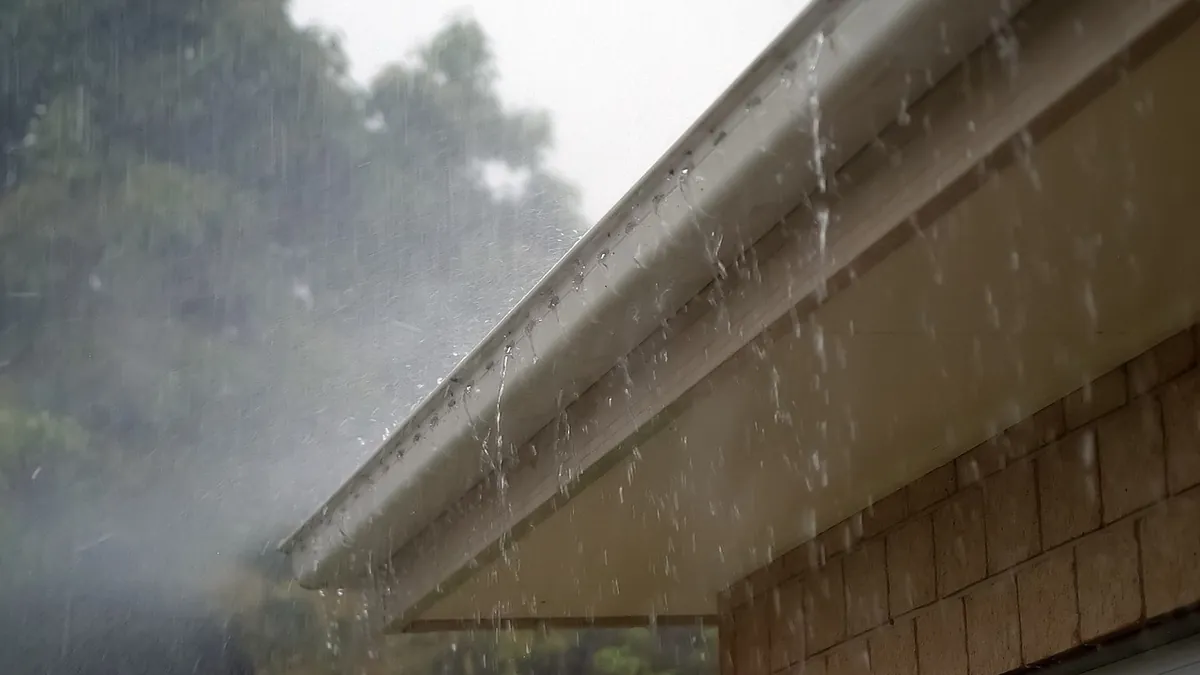
Gutters are designed to channel rainwater away from your home’s foundation, protecting it from water damage. When they function correctly, they’re largely invisible heroes. However, when a gutter leaks, especially at the joints, it becomes a noticeable problem, undermining the very purpose of the system. Understanding why these leaks occur is the first step toward effective repair. This guide explores the common reasons behind leaking gutter joints and outlines practical solutions to address them.
Key Differences Between Leaking Gutter Joints and Gutter Seam Leaks
While often used interchangeably, “leaking gutter joints” and “gutter seam leaks” refer to distinct points of failure within a gutter system, though both lead to water escaping where it shouldn’t.
A leaking gutter joint specifically refers to water escaping from the connection points between two separate sections of guttering. These joints typically occur at corners (inside or outside), at drop outlets which connect to downspouts, or where two straight sections of gutter meet to form a longer run. These connections are often made using pre-fabricated fittings that overlap the main gutter sections, sealed with a specialized compound and sometimes fastened with screws or rivets. The integrity of these connections relies heavily on the sealant maintaining its bond and the fasteners remaining secure.
A gutter seam leak, on the other hand, usually describes a leak in a continuous section of guttering where two pieces of metal or vinyl were originally joined during manufacturing or installation to create a longer, custom-sized segment. This is more common in older or custom-fabricated gutter systems where long runs couldn’t be achieved with a single piece of material. Modern seamless gutters largely eliminate these mid-section seams, though they still have joints at corners and downspout connections. In a seamed gutter, the leak occurs directly along the line where the two pieces of material overlap and were originally sealed or soldered.
The practical implications of these differences primarily relate to the repair approach. A leaking gutter joint might require re-sealing an existing fitting or replacing a failing corner piece. A gutter seam leak, particularly in an older system, could indicate a broader structural weakness in the gutter itself, potentially requiring more extensive repair or even replacement of a section of the gutter. For instance, if you have a 40-foot run of gutter made from three 13-foot sections joined together, a leak at one of those mid-run connections is a “gutter seam leak.” If that same 40-foot gutter then turns a corner to continue its path, a leak at the corner fitting would be a “leaking gutter joint.”
Ultimately, both scenarios result in water dripping where it shouldn’t, but identifying whether it’s a joint or a seam helps pinpoint the exact failure point and determine the most appropriate fix.
Shared Benefits and Overlaps
Despite their distinctions, both leaking gutter joints and gutter seam leaks share a common set of underlying causes and consequences, as well as similar repair principles.
One primary overlap is the degradation of sealant. Whether it’s the sealant holding together a corner joint or the sealant along a custom-fabricated seam, all sealants have a finite lifespan. Exposure to UV radiation from the sun, extreme temperature fluctuations (hot summers, freezing winters), and constant wetting and drying cycles cause sealants to dry out, crack, shrink, and lose adhesion. Over time, this natural deterioration creates pathways for water to escape.
Another shared factor is improper installation. If joints or seams were not adequately cleaned before sealant application, if insufficient sealant was used, or if fasteners were not properly secured, the connection is weak from the start. This can lead to premature failure, sometimes within months of installation. For example, if a gutter corner joint isn’t seated correctly or if the sealant isn’t applied smoothly and thoroughly, it’s prone to leaking regardless of the sealant’s quality. Similarly, a poorly soldered or glued seam will fail quickly.
Physical damage also affects both types of leaks. Impact from falling branches, ladders leaning against the gutter, or even heavy ice dams can stress and warp gutter material, compromising the integrity of both joints and seams. A minor dent near a joint can pull the connection apart, just as a sharp blow to a seamed section can open up the original bond.
The consequences of both types of leaks are identical. Untreated leaks, whether from a joint or a seam, can lead to:
- Foundation damage: Water pooling near the foundation can saturate the soil, leading to hydrostatic pressure against basement walls, cracks, and eventually costly structural repairs.
- Landscape erosion: Constant dripping can wash away topsoil, damage plants, and create unsightly trenches in flowerbeds or lawns.
- Siding and fascia damage: Water running down the side of the house can stain or rot siding, fascia boards, and trim, creating entry points for pests and further deterioration.
- Pest infestations: Damp wood attracts termites, carpenter ants, and other insects.
- Mold and mildew: Persistent dampness on exterior surfaces can lead to mold and mildew growth, which can spread and impact indoor air quality if it gets into the attic or walls.
In terms of repair, the fundamental approach for both is similar: cleaning the affected area, removing old sealant, applying new, appropriate sealant, and ensuring proper drainage. The choice of sealant (e.g., silicone, urethane, elastomeric) and preparation methods are largely consistent, regardless of whether you’re addressing a corner joint or a mid-run seam. The goal is always to create a watertight barrier that can withstand environmental stresses.
When Leaking Gutter Joints May Be a Better Fit
The phrasing “when leaking gutter joints may be a better fit” is a bit of a misnomer, as a leaking gutter joint is always a problem to be solved, not a desirable outcome. However, if we interpret “better fit” as “easier to diagnose and repair” or “less indicative of systemic failure,” then certain scenarios make a leaking gutter joint a more manageable issue than a broader gutter seam leak.
Consider a scenario where you observe a consistent drip specifically at an outside corner of your gutter system. This is a classic leaking gutter joint. Often, the cause is the aging and cracking of the sealant used to bond the corner piece to the adjacent straight gutter sections. The problem is localized and visually apparent. Repairing this involves cleaning out the old sealant, ensuring the corner piece is still structurally sound and properly attached, and then applying a new, high-quality gutter sealant. This is typically a straightforward DIY task for someone comfortable on a ladder, requiring basic tools and a tube of sealant. The issue is contained to that single connection point.
Another instance where a leaking gutter joint is a relatively “better fit” for repair is when a drop outlet (the piece connecting the gutter to the downspout) begins to leak. These are also specific joint locations. Over time, the constant flow of water and debris can erode the sealant around the drop outlet, or the connection can become loose due to expansion and contraction. Again, the leak is isolated to this one component. Repair involves similar steps: cleaning, re-sealing, and potentially re-fastening. It doesn’t suggest a widespread failure of the entire gutter run.
Furthermore, leaks at joints are often the result of minor stresses that don’t compromise the main gutter material. For example, a heavy ice dam might slightly pull a corner joint apart without bending or cracking the gutter sections themselves. The primary issue is the compromised seal, not damaged gutter material. This makes the repair less about structural replacement and more about re-establishing a watertight bond.
In these cases, the problem is usually a single point of failure that can be addressed directly. The rest of the gutter system might be in excellent condition, meaning the repair is contained, less expensive, and less time-consuming. It doesn’t necessarily imply that the entire gutter system is nearing the end of its life, which can sometimes be the implication of a widespread seam leak in older or custom systems.
| Scenario for Leaking Gutter Joints | Repair Complexity | Indication of Systemic Issue |
|---|---|---|
| Corner joint leak | Low to Moderate | Low |
| Drop outlet/downspout connection | Low to Moderate | Low |
| Expansion joint failure | Moderate | Low |
| Minor sealant degradation | Low | Low |
When Gutter Seam Leak May Be a Better Fit
Similar to the previous section, “better fit” here refers to circumstances where addressing a gutter seam leak might be preferable or indicative of a specific repair approach compared to a joint leak. A gutter seam leak, particularly in older systems, can sometimes signal a more significant underlying issue, but paradoxically, in certain contexts, it can also be a more straightforward fix than a complex joint failure.
Consider an older, sectional gutter system where long runs were created by joining multiple shorter sections of guttering with overlap seams. If one of these mid-run seams develops a leak, it might simply be due to the original sealant or solder failing over decades of exposure. In such a case, if the gutter material itself (aluminum, galvanized steel, etc.) is still robust and not extensively corroded or dented, repairing that linear seam can be relatively direct. You clean the seam thoroughly, remove any loose material, and then re-seal it with a durable, flexible gutter sealant, or in the case of metal gutters, re-solder the seam. This is a “better fit” because the gutter sections on either side of the seam are still integral, and the repair focuses solely on restoring the integrity of that specific linear connection. It avoids the complexity of dealing with a pre-fabricated corner piece or drop outlet, which might have multiple surfaces and fasteners to contend with.
Another situation is when a custom-fabricated gutter has a seam that was created during installation to accommodate a unique architectural feature or an unusually long run. If this specific seam fails, and the rest of the custom gutter is in good shape, repairing that seam might be the most cost-effective and appropriate solution. It preserves the custom nature of the installation without requiring a full replacement. The repair focuses on the craftsmanship of that specific join.
Furthermore, if the leak is clearly along a seam that was initially soldered or welded (common in copper or steel gutters), and the failure is due to a crack in the solder or weld rather than widespread material corrosion, re-soldering or re-welding can be a highly durable and long-lasting repair. This might be a more robust fix than constantly re-applying sealant to a mechanically joined corner, which relies more on adhesive properties.
In these instances, the “gutter seam leak” is often a problem of linear integrity rather than the failure of a complex, multi-component fitting. If the gutter material surrounding the seam is sound, the repair is about reinforcing or recreating that specific bond. It avoids the potential for a joint to be misaligned, or for a pre-manufactured part to fail, which can sometimes be more challenging to address without replacement.
It’s important to note that if a gutter seam leak is accompanied by extensive corrosion, widespread sagging, or significant damage to the gutter material itself, then a simple seam repair is not a “better fit.” In those cases, the seam leak is a symptom of a larger problem, and gutter section replacement or a full system overhaul might be necessary.
| Scenario for Gutter Seam Leaks | Repair Complexity | Indication of Systemic Issue |
|---|---|---|
| Aging sealant/solder failure | Moderate | Low to Moderate |
| Custom-fabricated seam | Moderate | Low |
| Localized physical damage | Moderate | Low |
| Material is otherwise sound | Low to Moderate | Low |
How to Choose Based on Goals and Context
Choosing the right approach to fix a leaking gutter, whether it’s at a joint or a seam, hinges on several factors: the nature of the leak, the condition of the gutter system, your budget, and your long-term goals for your home’s exterior. It’s not about choosing between a joint leak or a seam leak, but rather choosing the best repair strategy once the type of leak is identified.
1. Assess the Nature and Extent of the Leak:
- Location and Severity: Is the leak a slow drip at a single corner (joint) or a steady stream along a long section (seam)? A tiny drip might be a simple re-seal, while a torrent could indicate a larger structural issue.
- Gutter Material and Age: Are your gutters aluminum, vinyl, steel, or copper? How old are they? Older gutters, especially those nearing the end of their expected lifespan (e.g., 20+ years for aluminum), might have widespread issues that make spot repairs less cost-effective in the long run. Vinyl gutters, for example, can become brittle with age, making joint repairs challenging without causing further damage.
- Surrounding Damage: Is there any fascia rot, siding damage, or foundation erosion associated with the leak? This indicates the leak has been ongoing and may necessitate more than just a gutter repair.
2. Evaluate the Condition of the Gutter System:
- Overall Integrity: Are the gutters sagging anywhere? Are there numerous dents or bends? Is there excessive corrosion or rust, particularly at fasteners or along seams? If the general condition is poor, a single leak repair might be a temporary band-aid.
- Slope and Drainage: Are your gutters properly sloped towards the downspouts? Water pooling in the gutter can exacerbate leaks at joints and seams. If the slope is incorrect, even a perfect seal might eventually fail due to standing water.
- Downspout Functionality: Are downspouts clear and directing water far enough away from the foundation? Clogged downspouts can cause gutters to overflow, putting undue stress on joints and seams.
3. Consider Your Budget and Time Horizon:
- Short-Term Fix (Cost-Effective): If the leak is isolated, the gutter system is otherwise sound, and your budget is constrained, a targeted repair (cleaning, re-sealing, re-fastening) is the most immediate and affordable solution. This is often the case for a single leaking gutter joint or a small, localized seam failure.
- Long-Term Investment (Higher Cost): If multiple leaks are present, the gutters are old and deteriorating, or there are significant structural issues, investing in section replacement or even a full gutter system replacement might be more economical in the long run. For instance, if several seams are failing across a long run of an old sectional gutter, replacing that entire run with a seamless section could be a better investment than repeatedly patching.
4. DIY vs. Professional Help:
- DIY Suitability: Simple joint re-sealing or minor seam patching can often be a DIY project for those comfortable working on ladders and with basic tools.
- Professional Intervention: Complex repairs, extensive damage, high-up gutters, or a desire for a warranty on the work often warrant hiring a professional gutter company. They can provide a comprehensive assessment and suggest the most durable solution.
Decision Matrix for Gutter Leak Repair
| Factor | Localized Joint Leak (e.g., corner) | Localized Seam Leak (e.g., mid-run) | Multiple Leaks / Widespread Damage |
|---|---|---|---|
| Gutter Condition | Good, minor issue | Good, localized issue | Poor, sagging, corroded, old |
| Severity | Drip to slow stream | Drip to slow stream | Steady stream, overflow |
| Goal | Quick, affordable fix | Durable, targeted fix | Long-term solution, prevent future issues |
| Recommended Action | DIY re-seal/re-fasten | DIY re-seal/re-solder (if applicable) or Pro repair | Professional assessment, section replacement, or full system replacement |
| Cost Implication | Low | Low to Moderate | High |
| Timeframe | Immediate | Immediate to Short-term | Medium to Long-term |
Ultimately, the choice comes down to accurately diagnosing the problem and aligning the solution with your immediate needs and future plans for your home. Don’t simply patch a symptom if it’s indicative of a larger, systemic problem that will resurface elsewhere soon.
Frequently Asked Questions
What is leaking gutter joints?
Leaking gutter joints refer to water escaping from the points where different sections of a rain gutter system are connected. These connection points commonly occur at corners (inside or outside), where a gutter section meets a downspout (via a drop outlet), or where two straight lengths of gutter are joined to create a longer run. The leaks typically happen because the sealant used to create a watertight bond at these junctions has degraded, cracked, or lost adhesion over time, or because the connection itself has loosened due to expansion, contraction, or physical stress.
How does leaking gutter joints compare with alternatives?
When discussing “alternatives” to leaking gutter joints, it’s usually in the context of different gutter system designs or alternative failure points.
Seamless Gutters vs. Sectional Gutters:
- Sectional Gutters: These are made from pre-cut sections joined together, creating numerous potential leaking gutter joints and seams. They are generally less expensive to install initially and easier for DIYers. However, they are more prone to leaks over time due to the sheer number of connections.
- Seamless Gutters: These are custom-fabricated on-site from a single roll of material, resulting in very long sections without mid-run seams. This significantly reduces the potential for leaks. They still have joints at corners and downspout connections, which can leak, but overall, they offer superior leak resistance compared to sectional gutters. They are typically more expensive to install and require professional expertise.
Leaking Gutter Joints vs. Gutter Seam Leaks: As discussed, a joint leak is at a specific fitting (corner, drop outlet), while a seam leak is along a linear join within a straight section of gutter. Both are failures of connections, but sometimes a seam leak can indicate an older, more custom system or a broader material failure if the seam is soldered.
Leaking Gutter Joints vs. Gutter Overflow: Gutter overflow occurs when water spills over the top edge of the gutter. This is often due to clogs (leaves, debris), insufficient gutter capacity for heavy rainfall, or improper slope. While a leaking joint lets water escape through the gutter, overflow causes water to spill over it. Both lead to water damage, but the root causes and solutions are different (cleaning for overflow, sealing for leaks).
Leaking Gutter Joints vs. Downspout Disconnections: Sometimes, the downspout itself detaches from the drop outlet or a lower section, causing water to dump near the foundation. This isn’t a leak in the gutter system itself but a failure in the water diversion path. Reattaching or repairing the downspout is the fix, distinct from sealing a joint.
In essence, seamless gutters are an “alternative” system designed to minimize joint and seam leaks. Other “alternatives” are different types of gutter failure that require distinct diagnostic and repair approaches.
What are the most common mistakes people make with leaking gutter joints?
Several common mistakes can lead to ineffective or short-lived repairs for leaking gutter joints:
- Not cleaning the surface thoroughly: Old sealant, dirt, grime, and oxidation prevent new sealant from adhering properly. The surface must be bone dry and meticulously clean for the new sealant to form a strong, lasting bond. Many people skip this crucial step or clean inadequately.
- Using the wrong type of sealant: Not all sealants are created equal. Using standard caulk, silicone meant for bathrooms, or a sealant not designed for outdoor use and expansion/contraction will result in a quick re-failure. Gutter-specific sealants, often elastomeric or urethane-based, are designed to withstand UV exposure, temperature changes, and constant moisture.
- Applying sealant over old sealant: New sealant rarely adheres well to old, degraded sealant. The old material needs to be scraped out as much as possible to allow the new sealant to bond directly to the gutter material.
- Insufficient application of sealant: A thin bead or a patchy application won’t create a watertight seal. The sealant needs to be applied generously and smoothly, ensuring it fills the entire gap and adheres to both surfaces of the joint.
- Not checking for underlying damage: Sometimes a leak isn’t just a sealant failure; it could be due to a loose fastener, a bent gutter section pulling the joint apart, or even a crack in the gutter material itself near the joint. Failing to address these underlying structural issues means the leak will return.
- Ignoring proper drainage: If the gutter is not sloped correctly, water will pool at the joint, putting constant stress on the sealant and accelerating its degradation. A leak repair won’t last if the underlying drainage problem isn’t fixed.
- Working in wet or cold conditions: Most sealants require dry conditions and specific temperature ranges for proper curing. Applying sealant during rain, or when temperatures are too low, will compromise its ability to bond and cure effectively.
- Not wearing appropriate safety gear: Working on ladders carries inherent risks. Rushing, not securing the ladder, or working alone without proper precautions can lead to serious injury.
Addressing these common mistakes can significantly improve the longevity and effectiveness of any gutter joint repair.
Conclusion
Leaking gutter joints are a common household problem that, if ignored, can lead to significant and costly damage to your home’s foundation, landscaping, and exterior. While the exact repair approach may vary slightly depending on whether the leak is at a corner joint or a mid-run seam, the underlying principles of thorough cleaning, appropriate sealant selection, and careful application remain consistent. Understanding the causes, such as aging sealants, improper installation, or physical damage, empowers homeowners to diagnose and address these issues effectively. For minor, localized leaks and otherwise sound gutter systems, a targeted DIY repair is often feasible. However, for widespread issues, extensive damage, or if you’re uncomfortable working at heights, professional intervention offers a more comprehensive and durable solution. Prioritizing gutter maintenance and timely repairs is an investment in the long-term health and integrity of your home.
DIY safety disclaimer
Home Leak Fix publishes general DIY information for homeowners. Water intrusion can involve structural, electrical, height, mould, or insurance risks. Use proper safety equipment, follow local building rules, and call a qualified professional when a repair is unsafe, unclear, or beyond your experience.